Tuesday, 26 April 2016

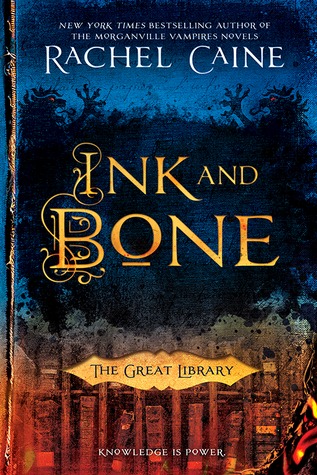
Ink and Bone

20643052

Book Title: Ink and Bone
Author: Rachel Caine
Series: The Great Library #1
Date Started: April 20th 2016
Date Completed: April 25th 2016
Genres: Fantasy, Adventure, Mystery, Romance
Quality Rating: Four Stars
Enjoyment Rating: Four Star
Final Rating: Four stars
Review:

◆ Thank you NetGalley for this eBook copy for review ◆

Honestly, I underestimated Ink and Bone when I started reading. The first half wasn't really encouraging me to think differently because of it's slow pace, but suddenly halfway through things really picked up and it became a really entertaining and quick read. By big downside to the book as a whole was that it felt a lot like a prologue to the sequel.

The world building was both a strength of this book, but also a weakness for me if I thought about it too much. Obviously, the way to solve this was to not think about it too much, and once I accepted that I was able to dive into the story a lot better. Caine's captured a nice blend of mythology and traditional adventure-mystery worlds, but I don't feel like the futuristic/alternate-history genre really came into it. When I started reading I imagined a 19th Century setting, only to find out it's more of a dystopian civilisation. For me that element didn't fit very well, and also didn't need to be there: because it's an alternate history where the Library of Alexandria never gets burnt down, I don't think we needed to know exactly when it was set - or if she was trying to show how this regressed our society I didn't feel like she looked at it enough. Overall, I wasn't sure what Caine was trying to do, but like I said: just don't think about it too much. But even with some of the inconsistencies at the back of my head, I honestly did find Ink and Bone enjoyable to read. I can't even pinpoint what made it so, but I'm really eager to get onto the next one.

Ink and Bone takes its time to establish what it's doing, but it definitely makes up for it in the end. I was getting dubious at the competition/school phase when I could predict exactly who was going to get through to being a Librarian (shocker: I was right), but then Caine twists things around and we're on a different path. This happens a couple of times, so if you aren't sure about this book to start with, keep going because it gets interesting pretty quickly.
A big part of what makes Ink and Bone enjoyable are the relationships, but I really liked how they weren't the main aspect of the story. The cute little pairings and friendships are really sweet and enjoyable to read about, but because they're placed in the background it lets them stay sweet as opposed to sickly. Caine could've quite easily dominated the text with romance or family relationships, but she let the story tell itself as a priority, and let us enjoy all the characters' interactions on the side.
I didn't feel like there was really a big climax past the cliffhanger, but I think the story (past the halfway mark) is consistent enough in its tension and excitement that it doesn't really matter. Climaxes tend to resolve problems set up in the narrative, and there aren't really any issues Caine can solve in this first book. Instead she communicates the transition into another part of the characters' story and leaves us wanting more.

I really liked the diversity of characters in this book, and I'm kind of conflicted because I really liked how they were just naturally diverse without it having to be their token trait in their personalities, but at the same time I really wish they could've been more at the forefront of the story. Our protagonists are very much the norm, with the range of diverse characters in secondary roles. I'm not complaining too much since the range of nationalities, sexualities, personalities and genders were really nice to see, I'm just... considering the unused potential they had.
Jess was a good protagonist, but as usual not extraordinary. I think his main strength was being able to see things from different perspectives and really adapt: he's not the same person at the start that you find after he's gotten to know what the Library is capable of. To be brutally honest, I'm not sure if this was exactly planned character development, or more what Caine twisting her protagonist to get everyone to the end of the book, but either way it still worked in terms of the story and didn't pull me out of narrative with its convenience.
I also really liked Morgan. Her introduction into the story is a little unconventional and I was confused at her exact involvement to start with, but she soon proves herself. Essentially how Caine sets things out at the start of this book don't make a whole lot of sense when you're reading it, but by the second half things slowly start to click into place. From a reader's perspective I'm not sure how well it was done since I did doubt lots of things to start with, but I can understand why Caine hides details and secrets from the reader.

Like I've mentioned, this book is very slow to start with - not necessarily boring since you've got some nice characters and an interesting world, but it did make me wonder where the story was going. Of course, once Caine lights the fuse it gets serious very, very fast. I flew through the second half in the way that actually, I didn't really want to put the book down.

I enjoyed Ink and Bone a lot more than I was expecting to, and I'm actually really eager to get onto the next book when it comes out later this year. If you like fantasy, a little bit of adventure and mystery along with some cute characters and books (oh, the books) then it's definitely worth putting it on your shelf.

Image Source - https://www.goodreads.com/book/show/20643052-ink-and-bone

Thursday, 21 April 2016

Inkdeath


Book Title: Inkdeath
Author: Cornelia Funke
Series: Inkworld #3
Date Started: April 8th 2016
Date Completed: April 20th 2016
Genres: Fantasy, Adventure, Romance
Quality Rating: Five Stars
Enjoyment Rating: Five Star
Final Rating: Five stars
Review:

Inkdeath is a living, breathing fairytale on a larger scale. There are so many little reminiscent details, but it's all strung together by Funke's entirely original and stunning imagination. I've waited a long time to read this book - I read Inkheart when I was about seven or eight - but the second I opened the page I was entirely lost in the Inkworld again the whole way through. I didn't notice it was taking me a while to read or that it was so long, because I wasn't there to notice the page numbers, I was in Ombra, or Elinor's library, or in the Black Prince's cave, or in Violante's castle.

Funke's love of books and storytelling is so tangible in her writing that it makes it impossible not to fall in love with reading all over again. If anything, Inkheart and its sequels are a love letter to books and stories, for children and adults, girls and boys: 'books love anyone who opens them' and it really comes across.
The writing is very traditional in terms of the kinds of roles available for each character (e.g. women, children etc), but Funke acknowledges this and still finds little ways around it anyway. For example, there's always a little sign in the children's voices when they know that they can't be the heroes of the story, and that the Bluejay has to do that for them, but they can still fight and they do. Just little ways around things like that show that you can still use traditional conventions without marginalising people (which is I think something we still struggle with sometimes in storytelling).

The Inkworld series is based a lot around world building , so I was happy to see that Inkdeath both worked well with what had already been established, but also was able to take steps forward from the previous books. We get to discover more but still explore the storylines already in place.
You can see on every page just how much inspiration is taken from fairytales, but I also noticed how much Funke has taken from more modern books as well - the quotes at the start of each chapter name influences like Ted Hughes, Philip Pullman, Markus Zusak etc, but I could feel all the different influences in the writing too. Funke's own style is very much in centerstage, but its nice being able to pick out all the various other aspects you can recognise from all over literature. Not least because you're reading about people from our world that have found themselves lost between the pages of a book. And in the best way possible, Funke does this with sophistication: full of the magic and elegance of traditional fairytale, but with the magic and wit of a child's imagination. This isn't your average children's book.
The final climax of Inkdeath wasn't as dramatic as I had hoped, but the book had the most wonderful epilogue I've ever read. Inkdeath, for me, stays at a relatively similar level of tension and excitement throughout, so the finale didn't burst out of the pages as maybe I was expecting, but the fact that when I closed the book I felt so satisfied at how everything had drawn together was more than enough for me.

Inkdeath is the kind of book where every character is meticulously crafted and perfectly chosen, and who you can't help but love, even if they're not a good guy. On top of that you have all the layers of relationships they have with everyone around them, which are all heartwarming to say the least. Without going into spoilers, Dustfinger has 100% been the best character of the entire series and he will be one of my most beloved fictional characters forever.
I've always liked Mo, but I don't think I'd ever really connected with the main protagonist of these books as much as I did in this one. I think his confliction between being the bookbinder, and the Bluejay that Fenoglio had written him as was the game changer for me; as much as perfect Mo is great, seeing his dark side was really interesting.
Meggie is just as much as protagonist as her father of course. I don't feel like she had as much of a role as she had in Inkspell, but her presence was still a key part to the book, and a key part to showing us how beautiful the Inkworld is. You might have Mo running around for his - and everyone else's - life, but getting to see the Inkworld in all its glory again from a slightly (only slightly) less dramatic angle gave that good balance that kept my motivation to read up.

Pacing-wise Inkdeath was just right: it isn't the kind of book that is unputdownable because of the constant state of drama, but at the same time the sheer amount of different stories happening at the same time, all converging on one point means that every time you get to the end of a chapter and have a peek at the next one, you just want to keep going. I didn't get bored at any point, and I was completely lost in the story the whole time.

The Inkworld trilogy is one of those series that I can always go back to and feel comforted by. Even though it's over it's still like Hogwarts in the way that I can go right back to it whenever I need it. Although Inkdeath itself didn't overwhelm me with emotions I still loved it, and thought it was a wonderful end to the story. Part of the reason I wasn't overwhelmed by it was because of how comforted I am by it: doesn't matter if you're in a life-threatening situation, I feel a home in this world (which is ironically the same predicament as quite a few of the characters so it evens out in the end).

Image Source - https://blogger.googleusercontent.com/img/b/R29vZ2xl/AVvXsEhDQcCA-OqQnHbnt2no_obJ0Udo2bXlphbzsEIgEiLj7E0jL6NDFB-Ty_s_hbJ5gPQM5AE4_hM4RWdlyjF78Pkgtw8y38UyQcEBgSCJyRwfT8tjE1tlpVoIU87deOELesc65IAbUUf0AhzA/s1600/2325825.jpeg

Friday, 8 April 2016

Red Rising

18046624

Book Title: Red Rising
Author: Pierce Brown
Series: Red Rising #1
Date Started: March 28th 2016
Date Completed: April 8th 2016
Genres: Dystopian, Action
Quality Rating: Four Stars
Enjoyment Rating: Three Star
Final Rating: Four stars
Review:

Red Rising wasn't nearly as original as I was expecting, but at the same time I'm still conflicted because it was a good book. At one point I thought it was that the world and story were brilliantly established but the characters werent puling through, but I'm not so sure anymore. Overall, I was interested, but I didn't care what happened.

I'm still not sure where I stand with Brown's writing: the action felt a bit condensed and heavy without saying much, but was definitely exciting; there isn't much dialogue thinking back on it, but what was there felt reasonably natural; the narration takes up most of the book but that in itself isn't too boring and actually gives relevant information to the story as opposed to rambling about something that only has meaning for the author. But the fact that most of the written skill was around explaining the military manoeuvres and the gory ways each leader was rising to the top but without any real meaning, it felt a little bit of a big boys game version of Lord of the Flies without much consideration on the other elements making up the book to back it up. It wasn't bad - Brown surprised me with his fluency - but I think it focused on some strange areas given the overarching story it was going to tell.

Red Rising is arguably built on its politics and social ideas. I generally love these kinds of books, and after pushing the unavoidable comparisons to every other Young Adult dystopian out there from my head (primarily The Hunger Games, Divergent, Uglies etc), I found a few new things in the wold building. Having said that, I don't quite understand the reasoning of quite a few methods used by this government - and the class/race system especially confused me. The Golds WERE different to the other class/races below them; it takes multiple surgeries to become one of them, so what was the moral point? I feel like there should be a social context we can relate to in all this, but I can't find the right angle for it. You can't say that all the races are the same, because they're practically different species here, but I can't see how it's implied that Reds are just as valuable as Golds: it's almost like Brown was confirming the Gold hierarchy beliefs.
This book also relies quite a bit on little revelations scattered throughout the whole thing - partially to show how clever Darrow is, but also to show how corrupt the system is. But I felt like some of these were just for the author, and there was no way the reader would've seen them coming or worked them out. Maybe I was really detached so didn't pick up the hints, but either way feeling like I wasn't really going to be given a chance to think ahead of the characters pushed me even further from the story because it felt like I was just an observers, as opposed to being able to problem-solve some stuff myself.
After all my issues with Red Rising, I still got completely immersed in the ending. You definitely get caught up in it and forget what's really going on behind all the scheming and games, so the resolution of the story on its own is almost a surprise - even more so when you remember what Darrow is building up to in the trilogy as a whole. Regardless of how hard I found it to get into, I really want to know where it goes from here.

The characters in Red Rising don't seem as strong or consistent as anything else (especially female roles - I was really disappointed by those actually). There just doesn't seem to be much substance under anyone, and even if there was Brown isn't one to keep people around the main plot line for long. I understand that people fall in and out of power (it was a good element of the story), but it felt like it was there partly to cover them randomly disappearing in the writing because the timing of a lot of them just didn't make sense given the circumstances. Really, I'm just frustrated because there was a lot of potential in some of those characters, but everything was sacrificed for Darrow.
Darrow himself was a mediocre hero at best unfortunately. He's a great leader, and incredibly important, but as a main protagonist he's a bit bland - he's very sure of himself a lot of the time, and rightly so. And while it's nice to have a protagonist who knows what they're doing, it makes for a bit of a slow story. The big thing with Red Rising is also the fact that Darrow is literally the only character who's consistently around, because we have to be inside his head. But no one else is around beside him consistently, and while this keeps things changing, I honestly wanted to see some more development from people who weren't as confident or skilled as Darrow. Darrow nailed the whole thing - now I want to see people mess up and how they deal with it.

Honestly, I didn't enjoy the first part of this book at all, but it's really important to set everything up. While I don't think books that sacrifice their openings to world build are skilfully written, I admit that when things kicked off it was much better knowing all the foundations to really understand what was happening and why it mattered. Having said that, there was something missing from keeping me glued to the story. All the way through I found myself falling in and out of interest and I'm still not sure why - I just know it definitely made it harder for me to feel engaged in the story.

I'm eager to see what happens next to Darrow; it feels like one of those stories that almost goes into a whole different world in each book, but I'm wary of all the hype surrounding the rest of the series. Red Rising wasn't what I was hoping for, but once I'd accepted that the little inconsistencies and strange orderings of the world I was able to find some good entertainment for the last hundred pages that was eventually enough to make me want more.

Image Source - https://www.goodreads.com/book/show/18046624-red-rising

Monday, 28 March 2016

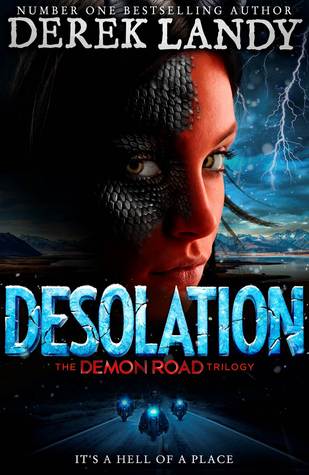
Desolation

26791238

Book Title: Desolation
Author: Derek Landy
Series: Demon Road #2
Date Started: March 23rd 2016
Date Completed: March 28th 2016
Genres: Horror, Fantasy, Action, Thriller
Quality Rating: Four Stars
Enjoyment Rating: Four Star
Final Rating: Four stars
Review:

◆ Thank you NetGalley for this eBook copy for review ◆

Desolation felt like it dipped a lot further into the horror genre than its predecessor, and though I'm not the biggest fan of horror I trust Derek pretty much unconditionally and it paid off because I enjoyed this book. It wasn't my favourite of what he's written, but I really respect the steps he's taken away from Skulduggery, especially after the response of Demon Road being very reminiscent of his other series. This feels like a different story now, and I'm slowly getting over the fact that Skulduggery is actually over.

Derek's a really skilled writer, though I have to admit I didn't really get the feeling of his trademark humour this time; it mostly works on lightheartedly joking about darker subjects - but when it gets this dark it's hard to joke around it. (Having said that, I liked that there are some very dark and twisted parts to these books, it's just not what I immediately expect from Derek.)
Something I noticed particularly in Desolation was how well Derek writes age diversity, and when I think about it he's always done it incredibly well. There's such a range of generations when it comes to characters, even within the 'main' cast of people, and we get to jump around in all their stories, and each is told just as convincingly as another. We can shift from a fourteen-year-old kid being immature but kind, to an elderly man tired with the modern world, to a seventeen-year-old girl going through your average teenage crisis while also running for their lives across America - okay maybe not that average.

I kind of miss the slow discovery of all these supernatural parts of the world that we had in the first book; everything felt a little static in Desolation after the whirlwind of last time. It was good in the end, but it did take a while to pick up after establishing that Desolation town was weird. I wanted to get past the 'weird' bit and onto the chaos and action and, well, desolation that Amber and Milo tend to leave in their wake. But I wasn't disappointed by those standards in the end.
You've also got to love these books for their geeky little references that sneak their way in (I can definitely see where Game of Thrones and maybe X-Men have had their influences - and of course every horror film ever). I'm generally not a huge fan of spending all your time making little in jokes for your own characters that don't mean a whole lot to your reader, but Derek's subtle and clever enough to make them very relatable without being directly real.
Desolation had a good ending, and I like where it leaves us for the finale, but I have to say it felt a bit rushed right at the very end when everything else before has taken so long. Arguably this whole trilogy follows directly on from one another but I was left feeling a little bit like we had cut off before the proper climax - which understandably will probably be the entire last book knowing Derek - but it just felt a bit off for me.

Character-wise I'm so, so, so happy with what he's done. When it comes to diversity, sexuality, human nature and relationships, hero tropes and character roles, Derek just has this way of making you think it's a good quality norm, and then turning things on their heads so you're left wondering why you would ever make assumptions about someones identity. And at the same time, he can joke around with it honestly and fairly, but keep up that humour and satirical atmosphere. Characters are a lot more interesting when you're invited to appreciate what they're going through, but also to not take them entirely seriously all the time.
Amber herself is a great protagonist. There's almost a trend in Young Adult fiction at the moment around trying to ignore the 'chosen one' trope by making the protagonist an antihero - what I've found is that mostly antihero has been condensed down to not being a nice person all of the time, but still ultimately saving the day and having people treat you like a saviour anyway. In a lot of ways you could see Amber as this too, but in a lot of ways she's not that: she's not a good person. I'm not rooting for her anymore, but hell it's so interesting to read about, because I don't see her as the good guy anymore, and that's not her fault, but that's the way it is. And she isn't going to waste time crying over how unfair it is. She owns it and she goes out and kicks ass instead.
My one criticism when it comes to characters in Desolation was that there was no way near enough Milo. I said last year that Milo basically had my reaction to everything going on, and I needed more of that this time around. Because Milo is great and Amber values his friendship even if she's got slightly bigger problems that keeping up conversation with him.

Derek took his sweet time in this book. I was starting to get a little worried near the beginning because I just could not get into it, but then when he actually started his story things went pretty smoothly from there. Derek writes chaos (both its loud and quiet moments) very well, but it means that the set up can sometimes be a bit awkward if it takes some time to establish - after going from such a huge climax at the end of the last book I can understand why suddenly there had to be a bit of a lull in activity before things started up again.

Looking at the release times for this trilogy I'm very impressed that they're coming out so close together (the last book is supposed to be with us in August of this year), and to a high quality. There's no shame in taking time with redrafting but it's quite a skill to be able to churn them out to such a tight deadline as well. And I think we can expect to go even deeper into the horror genre for the conclusion of the series, though I have to say I still haven't exactly been scared by Derek's books yet - they're creepy and weird (and very gory), but not scary. Not yet. Don't hold me to that for the future.

Image Source - https://www.goodreads.com/book/show/26791238-desolation

Wednesday, 23 March 2016

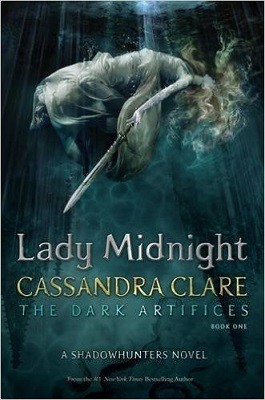
Lady Midnight

24851136

Book Title: Lady Midnight
Author: Cassandra Clare
Series: The Dark Artifices #1
Date Started: March 16th 2016
Date Completed: March 23rd 2016
Genres: Romance, Fantasy, Action, Mystery
Quality Rating: Three Stars
Enjoyment Rating: Four Star
Final Rating: Four stars
Review:

In a nutshell: a strong middle, weak beginning and end. I enjoyed Lady Midnight, but it could have been better if the Blackthorns and Co. were given their own story. I was so sick of the name dropping and cameos (if they even qualify as cameos at this point) by the end that I didn't bother reading the extra story at the back - I'd had more than enough of Clary and the others. I get that all of Clare's books link and it's clever but can't you please let these characters have their own story alongside it?

To kick off what I think about the writing, I need to say a huge warning to anyone who hasn't read all of Clare's previously published books: DON'T READ THIS YET. Something I really, really hate about Clare's various series and the obsession of them all being intrinsically tied together is that you have to literally read them in publishing order to avoid being spoiled. I remember thinking this reading City of Heavenly Fire; it's a good job I read The Infernal Devices to use time while I was waiting for that book to come out, or I would have been completely spoiled at the ending. And now, with Lady Midnight, not only does it spoil The Infernal Devices if you haven't read them, but also City of Heavenly Fire (and the various novellas if you care). I understand Clare's intentions with this but it makes the whole collection of books actually quite inaccessible and infuriating if you're first going into them - it's also not like you can go straight into her later series and be able to understand what's going on because of how much she depends on characters and storylines from her previous books. So I guess, if you've been with her from the start or are willing to begin reading right at the very beginning, you're fine - otherwise there isn't much point starting.
Also as a side note, the references to classical civilisations didn't work for me. As a bit of a classics geek I just tried to ignore it as best I could, and couldn't help feeling it was a bit of tokenism to make the Blackthorns quirky.

There's the same pattern in pretty much all of Clare's books: the forbidden love (and the obsession with finding loopholes in it) and the idea of family and friends being the strength against law. Now disclaimer, I read Clare's novels because they're entertaining and enjoyable above all else, but I was starting to fall into expectations that actually there was more beneath the romance and the teenage conventions. But just when I was expecting things to explode when it comes to the politics, the supernatural species exploration, even the way we're allowed to discover supernatural parts of famous cities, it all disappears. I mean, one of the main conflicts in Lady Midnight is the politics between faeries and Shadowhunters - yet barely any politics is actually shown! It feels a bit like we've stepped forward in terms of writing quality, but backwards when it comes to constructing stories.
In theory the climax was reasonably well put together: the main plot line of the story itself is resolved, which is something I think is really important, especially when it comes to these long stories, so that individual books don't blur into one another. But then afterwards a dozen new mysteries are introduced for the next book. Again I was disappointed in Clare at this point because she had pulled off a resolution really nicely, but then just had to push some 'cliffhangers' on the end for the sake of it (and it's not like she needs to persuade people to come back again, is it?).

The characters are often Clare's strong point, and while yes, the people are the driving force of this book, they didn't seem as solid to me as I remember other feeling before.
Emma I found to be the least irritating of Clare's protagonists (I don't have a great track record of liking her primary heroines - or heroes for that matter), but even so I still wasn't a huge fan of her. She was spiteful at times near the beginning, and towards the end seemed to lose particularly distinguishable features of her personality. I also didn't really feel her connection with Julian either - I could predict how they would be around each other, but more from convention than sensing what their individual relationship was.
I loved the Blackthorns as a whole, but it did come across a little bit like the Julian show. I felt across the whole board in Lady Midnight that the side characters weren't really as developed as in Clare's other series. I also really liked Cristina, and thought she had potential, but we're never really given proper episodes in their personal stories like in The Mortal Instruments or The Infernal Devices. I think it's a real shame since I know a lot of people (including myself) much prefer the side characters to the main protagonists.

Clare's books are often addictive, and I definitely found this when I got into the middle of the story. I do think Lady Midnight was unnecessarily long; there didn't really need to be such a slow build up and such a long come down - especially near the end. I guess I understand establishing the setting at the beginning of the book, but there really wasn't the need for such a drawn out ending just so all these characters from the other books could be thrown in.

Most of my disappointment for this book came from my frustration of knowing that Clare can do much better. Everything's become a little bit preoccupied at tying the web closer together as opposed to making stories that hold up by themselves and fit it naturally. And I did enjoy it, but I was just expecting better, especially with all the hyped reviews recently.

Image Source - https://www.goodreads.com/book/show/24851136-lady-midnight

Thursday, 17 March 2016

Salt to the Sea

28930418

Book Title: Salt to the Sea
Author: Ruta Sepetys
Date Started: March 14th 2016
Date Completed: March 16th 2016
Genres: Historical, Mystery, Romance
Quality Rating: Five Stars
Enjoyment Rating: Four Star
Final Rating: Five stars
Review:

◆ Thank you NetGalley for this eBook copy for review ◆

I was really surprised at how engaged I was with Salt to the Sea throughout the entire book. In fact even when I put it down and went to do other things I could not stop thinking about it. I'm not really a fan of WW2 fiction but the exploration of people who are often ignored, especially in Western literature around WW2, was really interesting and eye-opening. But even beyond that, it was really enjoyable just as a reading experience, and very well written for the age range considering a lot of the subject matter.

Sepetys has a really nice writing style that's very nice at giving subtle differences in voices. I especially liked the way you could distinguish each perspective and the sorts of ages the characters were before we were really told anything about them. But the real praise needs to go to how well she's integrated actual historical information. Although I knew this was loosely based on real experiences refugees had during, but I didn't know until I'd finished reading and was looking at the brief afterword that I realised it was actually impressively accurate when it comes to historical events. It's shocking that such a huge event (that I don't want to go into too much, despite it being a real life disaster, because I think reading it yourself will explain it better) isn't even known in common knowledge, but this is a brilliant way to raise awareness.

Salt to the Sea is a difficult and at times harrowing story, but in a way that you can still read it and understand from a reader's perspective. I've read a lot of war stories that just focus on the suffering and hardship of its victims, and while that's a huge part of the genre, it sometimes feels so detached and unrealistic because of how one-sided it is. I enjoyed Salt to the Sea so much because it showed different sides to these experiences, where the characters can go from terrified to laughing to crying to loving. To portray a story like this you need to be able to capture humans as they are, and humans are volatile in how their act in situations. Yes, there's suffering. But actually there's more than that, and the mere fact that there's more is what makes going through these things meaningful in the end.
I thought the progression of the story was also really well done, with everything leading up to the climax but you don't realise it until it's too late. And of course, the ending itself was perfect. So fitting for the story Sepetys was telling, and bittersweet but satisfying from a reader's perspective.

This book had good and varied characters; all interesting, all believable and developed. I also really appreciated the diversity obviously in nationality, but also age, gender, ideologies, intelligence etc. A big part of this book is showing that people might be different but it's not defined by where you're from or what race it looks like you're from, and even with those differences between you, everyone deserves to be treated human. I've seen a lot of books that present this idea but don't carry it through when it comes to characters - but Sepetys did it perfectly.
Joana was my favourite, perhaps because I related to her quite quickly, but also because I really liked her depth of character. You have the maternal healer trope around her, and she's definitely the heart and soul of the group, but even though she didn't feel like she deserved that place she still kept to it. All these characters have tortured pasts, but they don't use them as excuses to feel sorry for themselves in a time of need for everyone. Joana is very vulnerable at times, but she knows what she does have the power to do, and so she works from there.
I also really loved Florian. Again, he has the big mysterious past that we slowly discover, but doesn't really matter in the end because it's how they act in the story itself that defines them. And when it came to that, I really liked how Florian's motivation meant the world to him, but suddenly it didn't matter and he found a way to be at peace with that (and not in the way you might be thinking).
I knew what was going on with Emilia the moment we got our first clue, but I liked the gradual reveal, and I liked how incredibly well it was dealt with. Considering the circumstances, the way Sepetys was able to be honest with being utterly brutal was amazing, and I think put a really positive twist not on the situation necessarily (how could you possibly do that?) but on the perseverance and importance of kindness and care from the characters.
Strangely enough, I also really liked Alfred. Well, as a person, I hated him. But that's the point. From a story-perspective, however, I thought it was really good to have someone who bought the whole Nazi propaganda because you do get the feeling that he means well. But the damage he causes from not being able to see through the lies and tyranny goes to show just how disastrous these dictators can be when put in charge of a nation that they can control so easily through fear and rumour.

The pacing of this book was well handled, giving the reader enough time to familiarise themselves with the characters and learn enough to understand their situation, but moving on before we have time to get too comfortable or bored. It's also structured in the way that each chapter flows nicely into each other so you can very easily end up reading them solidly for ages - which I definitely did. I think I read Salt to the Sea in four or five sittings overall because I didn't want to put it down.

Salt to the Sea is the perfect way to raise awareness of not just the specific events explored in the story, but also the general experiences of these people that are never talked about because they might not be at the center of all the drama of war. I'm so impressed with what Sepetys was able to do and I can't wait to read her other books because I should have read them sooner.

Image Source - https://www.goodreads.com/book/show/28930418-salt-to-the-sea

Tuesday, 15 March 2016

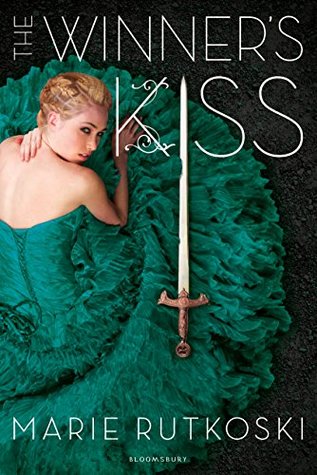
The Winner's Kiss

28587801

Book Title: The Winner's Kiss
Author: Marie Rutkoski
Series: The Winner's Trilogy #3
Date Started: March 11th 2016
Date Completed: March 14th 2016
Genres: Romance, Fantasy
Quality Rating: Four Stars
Enjoyment Rating: Five Star
Final Rating: Five stars
Review:

◆ Thank you NetGalley for this eBook copy for review ◆

The Winner's Trilogy is one of my favourite Young Adult series, and while I wasn't too impressed by the second book, The Winner's Kiss made up for it a million times over. This is one of those series that takes what its built up over all the books and create a complex and amazing conclusion. By the time we get to this war that's been brewing since the beginning, we've built up an understanding of why each side is fighting, why neither side is good or bad, and why the protagonists are fighting for it regardless. Everything works so well because it's been thought through so well, and when you add a realistic and addictive romance as one of the main features on top I can confidently say that this is one of the best Young Adult romance series out there.

I really like Rutkoski's writing style; there's a nice balance between description and dialogue, but she also has a way to just soften the edges to what she's saying so that you can fall really effortlessly into the prose and just let it move you along. It's quite clever when you then realise that actually she's not going to tell you everything that the characters are planning, so if you want to know you have to do some work yourself, or get caught out. You can tell she puts quite a lot of herself in Kestrel.
I especially noticed the portrayal of war in this book. It's not particularly brutal, but at the same time she doesn't simplify it or make the teenage protagonist untouchable and (in some unexplained way) better than the trained soldiers. They aren't always the most skilled, but at the same time because of the foundations she's built over the previous books, we know that actually the protagonists are justifiably in charge of some parts of the military. And there is a feeling of danger when they're involved in these battles - Rutkoski will kill someone off if that's what she feels the situation would lead to.

I found the story of The Winner's Kiss very enjoyable actually. It's a bit different from what we've seen before, but the same went for the first book going into the second. Of course we still have all the great twists and those little moments where you notice that actually the characters have been one step ahead of you. It was also really nice not to be bombarded with all the cliche romance that I felt took over the second book a little. We're at a point where Kestrel and Arin are at a reasonably solid point in their relationship and they carry on from there; the story isn't just them fighting/getting together etc, we get to see a lot more aspects to a narrative. I also realised how much more invested I am in a romance when it's realistic and just as important as everything else they're having to deal with.
The Winner's Kiss had a really fitting ending (though I wasn't really a fan of how unnecessarily long it took after the climax to get to the point of the ending, especially when she didn't really pull out another trick on us). I think endings are one of the hardest parts of a story to write because it depends so much on the atmosphere of the whole series, and where we've ended up. But Rutkoski did it perfectly and I'm really satisfied to be honest. Though a part of me is sad it's over, I'm not really upset because it was done really well.

The Winner's Kiss has a nice diversity of characters over ages, race, gender etc. Perhaps not as diverse as the pervious books, but for most of the story we are within this one group of people, unlike the rest of the trilogy. But you do get the feeling that Rutkoski has thought about all her named characters, and has a solid image of them when she's writing so they come across well in the final thing.
I adore Kestrel just as much as I did at the beginning. There's been a lot of debate recently over the new cover changes, and how she's been made to look more like a warrior princess popular in YA fantasy at the moment, and I think The Winner's Kiss just goes to show that that is not who she is at all. I adore Kestrel so much because she's just as powerful and trusted and respected as the others around her - but not for her military skill (it fact her poor ability to fight is mocked a couple of times). Kestrel's strength and ability is in strategy and intelligence and intuition, which is proven to be just as valuable and important. I don't think she needs to be rebranded as this 'physical' warrior girl, because she's a warrior girl in a different way and that's part of what makes her so amazing.
I also really love Arin as a character. He somehow fills a strong male position without the irritating and sexist 'I have to be moody'/'I have to have a six pack'/'I have to be this conventional male interest'. Admittedly, he might fall into those things every now and then, but it's not what defines his character (which is, in my opinion, a step forward for the portrayal male characters considering they're often overly stereotypical in romances).
There also has to be a special mention to Roshar who is hilarious and a wonderful person. And while I want to say I wish he was my friend, I don't think I could handle the teasing.

This book was so addictive. I read it in a couple of sittings because I just didn't want to put it down, and then I had to force myself to so I didn't miss college. The writing flows really nicely, each chapter leads on from one another well, and the writing is easy to get lost in. Had I not had to go out and do things I would've read it in one go. Easily.

I feel genuinely happy about everything that happened here: I rooted for the characters the whole way and I was content with how it ended. I'm not devastated that it's over because it's drawn together so well. It's so nice not to be taken on this silly 'will they/won't they' trope, and having the author constantly trying to second guess us. Rutkoski knows what she wants and she's confident that it works, so she doesn't waste time trying to second guess what her reader is thinking. She has a story to tell so she tells it with beauty and grace.

Image Source - https://www.goodreads.com/book/show/28587801-the-winner-s-kiss