Showing posts with label Harper Collins. Show all posts

Monday, 15 August 2016

The Deviants

23126437

Book Title: The Deviants
Author: C.J. Skuse
Date Started: August 9th 2016
Date Completed: August 14th 2016
Genres: Contemporary, Thriller, Mystery
Quality Rating: Four Stars
Enjoyment Rating: Five Star
Final Rating: Four stars
Review:

◆ Thank you HarperCollins for providing me with this proof copy to review ◆
◆ I will be participating in a blog tour for the release of The Deviants
in September on thedaisydeer.blogspot.co.uk - keep an eye out! ◆

I tend not to dive into the young adult contemporary genre unless something really catches my eye, but a revenge story inspired by the Famous Five if it had had a dark edge - and some impressive reviews - was enough to get me interested. Going in, I didn’t really know much about the actual story past those elements, and I definitely didn’t expect the tough issues that drove the central plot. As it happens I’m very happy a proof copy did find its way to me because I really enjoyed it.

Thinking back on it, The Deviants still impressed me at how enjoyable such a dark plot was made to be. This isn’t a slightly grim contemporary, there're some really uncomfortable topics explored in its pages. Having said that, there were definitely times when the characters felt very childish in their actions, and a little cliched in their behaviour. I think what made it work in the end was Skuse’s ability to create gentle tension in normal situations, and bring a little lightheartedness into an unhappy scene without disregarding the darker circumstances.

One of the main strengths of this book is its attention to realism and creating a sense of community between this small group of people. This is what holds up all the events, and makes you root for the protagonists even though they do some seriously questionable things at times. It’s also what makes things interesting and tense. There’s a genuine sense that there are going to be consequences if they don’t act, as well as if they do. At times, when things get a little bit darker, this gets a bit lost: we get some overly analytical expositions from people that probably wouldn’t be able to recount events in such a way so that the reader is educated enough to understand what’s happening, and the ending particularly was a bit unrealistic in its heights of drama. However, everything else is done so well and in a way that, as a reader, you really do feel on the edge of your seat and thrilled (something that I find surprisingly hard in a most of the thrillers I read) that honestly I’m fine to let little slip ups like that pass.
In terms of the climax itself, like I said, it felt a little over-the-top in a way that didn’t quite match the rest of the book, and the resolution that followed felt a bit too perfect. It was so neatly finished that something that was perhaps meant to feel bittersweet felt like a happy ending, and after what had felt like a very real and emotional storyline I didn’t get that proper feeling of triumph like I was supposed to. In terms of the educational benefit, I think Skuse achieves everything she set out to in those last twenty pages, but the enjoyable and realistic side of the book lost out a bit for me right at the finish line.

This book had a good cast of flawed but lovable characters all round. I was also happy that, as this is a book that relies a lot on events in the past, we get to learn and know these characters in the present. A lot of stories that are built on backstories favour flashbacks to develop their characters, and tend to neglect the story that they’re currently telling, but thankfully the characters of The Deviants were well written throughout.
For a protagonist who’s introduced to us as actually quite dislikable, I don’t quite know how I ended up so invested in Ella. She develops a lot even in this short book, but I think I really liked seeing a character constantly caught between confronting her emotions through anger or kindness. There’s a sense that she’s very aware herself that she makes bad decisions at times, but she also has enough faith in her judgement and character to push through them anyway. I think she was really strong and a great person to build this story around.

The Deviants gets into the action quickly but lets the reader ease into working things out for themselves. It’s very much a book where you can try and be one step ahead of the game if you want to, but can also just let it take you along slowly. This makes it quite enjoyable to read whatever your style is, but I will warn you that by the halfway point I couldn’t really stop reading until the end.

What really impressed me in the end with The Deviants was that Skuse didn’t just tick the boxes for a fun plot, diversity, tough issues and drama; she actually fulfils them the whole way through. Actions have consequences and it's not as simple as good vs evil. That sort of realism is so often sacrificed in favour of a fast-paced plot, but Skuse manages to sneak in both. Definitely worth a read but keep in mind it’s not for younger readers and there might be triggering events for some people.

Image Source - https://www.goodreads.com/book/show/23126437-the-deviants

Saturday, 12 September 2015

Carrying Albert Home

25952515

Book Title: Carrying Albert Home
Author: Homer Hickam
Date Started: September 4th 2015
Date Completed: September 12th 2015
Genres: Historical, Memoir, Adventure, Romance
Quality Rating: Three Stars
Enjoyment Rating: Two Stars
Final Rating: Three stars
Review:

◆ Thank you HarperCollins for providing me with this proof copy to review ◆

Carrying Albert Home started with an intriguing premise: a married couple, with a few problems to say the least, travelling across America during a time of economic failure - with an alligator. It sounded interesting and I was willing to try something new. Unfortunately, this book was okay but ultimately repeated the same sort of quirky stories a dozen or so times and then drew to a close.

The writing was quite suited to the book: pretty straightforward and at times quite quirky with its syntax. In the early parts of the book I really liked this, because it kind of replicated how simple the things Homer wanted were; but as we went on it didn't change at all, and things like action became very hard to follow in such basic terms. I half expected Hickam to become more thoughtful and complex with his prose as we learnt more about the characters but eventually the undemanding style became tedious.

I keep calling this book quirky - and I hope that comes across positively, because I genuinely think some people will enjoy its unusual outlook. But I have to admit, it does feel slightly optimistic to me. It's a very strange atmosphere for around the era of the Great Depression (to be honest I'm not entirely sure of the time period because quite a lot went over my head when I was trying to engage myself); putting the references to Disney and Steinbeck aside, we get quite a humorous and fun portrayal of America's dark days. Having studied various forms of history around the Wall Street Crash and it's consequences this was just bizarre and it made it very hard to concentrate on the actual action - the further detail that Carrying Albert Home is supposed to be somewhat of a memoir exaggerated just how wrong it felt for Homer and Elsie to be having such an adventure during such a crisis.
The structure of the story was very off for me too: having an episodic plot for a road trip is all well and good but when each part follows the same pattern it becomes so dull. Every time, the couple would stop off somewhere, a stranger would say something about the alligator, Elsie would wildly go and get herself into trouble so that Homer could go and get her out of it and they would have a moment where we're supposed to think 'oh maybe now they'll reconcile their marriage' - but of course they wouldn't. This was even more infuriating because of the potential there was: they had an alligator with them, surely it would've caused a few problems for them crossing borders or finding somewhere to stay; there were genuine pieces of action but so widely spread and with so little consequence it was like they never happened; they met up with multiple famous authors (something I really, really didn't like) and yet made nothing of it!
And because of this lack of meaningful or even really relevant happenings throughout the book, the ending feels unbelievable. It's pushed so hard that Elsie and Homer aren't happy together but apparently that can change in a second on the last page to resolve the story. Fair enough if this is based on a true story - and I do think based is the right word - but I don't think the progression of their marriage was portrayed in a way that really made sense of their journey or even helped me emphasise with two people I didn't like particularly at the beginning.

None of the characters felt particularly realistic to me - again for the quirkiness of the story this would have been alright had the book not claimed to be a biographical recount of Homer's (or let's be honest, it's really Elsie's) adventures. And on top of that, when I look back it's actually quite depressing how unkind the people were: Homer spends his time pining for a girl who obviously doesn't have an interest in him and keeps pushing and pushing when it isn't fair, but Elsie ignores every attempt and makes it very clear she still wants a man she hasn't seen in years. 
Homer I really wasn't a fan of: I understand he loves Elsie and wants her to be happy, but at the end of the day she does not want nor need his help and my reaction at numerous points in this book was that he needed to leave her alone.
Elsie would have been quite an interesting character is she hadn't been written so emotionlessly. She won't let herself be pushed around by men in a time when women were at a disadvantage, but at the same time when you look back everything she does it ultimately caused by the actions of the men around her. But she's so... placid? Robotic? Her dialogue especially just feels like paper rather than anything three dimensional and real.

Pacing in road trip stories has always been an issue for me; I just don't like plot lines that don't flow throughout the whole thing. It makes them really hard to get into and sometimes feels lazy and stalls consistency in character development. When that's then combined with a historical era and characters I can't relate to it just drags things out even further.

If you like road trips and 1930/40s America (like I said I wasn't paying too much attention to the time period) you might enjoy this quirky little twist on a story, but for me it just became dull. Nothing overtly wrong with it, but just not enough to really amount to anything. I personally wouldn't market this as a memoir because quite frankly it's very hard to take anything seriously if we're supposed to believe it's all true - the back of my copy even admits everything's true "except the bits that are made up."

Image Sourcehttps://www.goodreads.com/book/show/25952515-carrying-albert-home

Sunday, 14 June 2015

A Stolen Childhood

25047943

Book Title: A Stolen Childhood
Author: Casey Watson
Date Started: June 12th 2015
Date Completed: June 14th 2015
Genres: Contemporary, Memoir
Quality Rating: Three Stars
Enjoyment Rating: Three Stars
Final Rating: Three stars
Review:

Thank you to Harper Collins for providing me with this copy to review.

Having never read a memoir before, A Stolen Childhood was a new experience for me - one I'm not entirely sure if I liked to not. To be honest, the real world within the pages of a book isn't for me, however I do feel like Watson's book has something to say: she addresses something many people are too scared to, and in as brutally honest a way as a memoir. (Though there were several times where I had to take a step back from absorbing everything at face value.)

Watson's writing felt halfway between a diary and a formal report; I couldn't tell if it's supposed to be funny or serious (or perhaps both at the same time). Due to the subject matter and the personality of the author herself I can understand why this is, but it does make it difficult to read and get emersed in the story - you're too busy trying to work out if you're supposedly to be reading a scene in a shocker manner or with amusement.
There was a lot of irrelevant information thrown in as well: we don't need to know who everyone's fake names are, because we don't know who they were in real life and they don't play as big a part in the story as they might have done in the author's life. This particularly made things quite hard to keep up with, and was more than anything just unnecessary.
The final issue I had with the writing was my pet peeve: telling not showing. But this time, it came with a twist. Watson has the strange knack of showing something very well, but then feeling obliged to tell us exactly what she just implied through her wirintg. It's not needed, and actually came across as quite patronising in my opinion. More often than not she effectively presented a character being distressed or having a little unnoticeable tic, but then had to address it directly and with quite watered-down explanations.

A Stolen Childhood sent me right back into school memories, and not necessarily in a good way. Perhaps the shell-shock of secondary school hasn't quite worn off on me yet, but being thrown back into that little world of turmoil and drama wasn't exactly what I was looking for when I picked this up - not that that's necessarily a bad thing. Watson was able to replicate some quite uncomfortable moments any child will remember from their time in education, and quite a few only children who spent a day or two in the so-called 'unit' will relate to. But despite this accuracy in setting, Watson also succeeded in infuriating me quite a bit when it came to teacher's gossiping and dealing with children in their care - don't get me wrong, they were generally good. But I couldn't help feeling quite patronised as a student who not that long ago was at the age of the younger characters. I did also feel that, at times, some issues could've been approached in a different way, but I do appreciate having a narrator who takes the time to consider various sides of an argument.
Something to praise Watson for is her range of kids in the story; A Stolen Childhood is definitely sold as Kiara's story, but there are actually a few others children that we follow along the way. The book really needed that, I think, to keep things moving smoothly, and to stop things from becoming too absorbed in what's actually quite a small story that takes place over a longer period of time.
Things draw to a close in quite a strange way; admittedly, as a memoir, we expect that these are how things really did play out (make your own judgements on that), and so this can't really be held so harshly. However, I wonder is perhaps more development into Casey's emotions at this time that contrasted that seen previously in the book would've enhanced the ending to make it feel slightly more climactic.

Something I was expecting from a memoir was a wider range of characters: since it's based off real life, you'd expect the diversity of the real world to be somehow reflected in the story. However, I found that most people, save four or five, merged into one another. Not only are there so many people it's hard to keep track of anyway, but the somewhat bland qualities they're described with definitely doesn't help to distinguish them from one another.
Casey, though at times questionable in her methods and reactions, was a good narrator (and yes, I do say this fully aware that the narrator and the author are the same person - not that I'd be any less harsh than usual). For me, it was particularly intersting to see the story unfold entirely from her perspective: in fiction books, even in a first person perspective, you know that the author has things all worked out behind the scenes, and so it's hard for them not to drop little things that the characters wouldn't otherwise know in. But this book offered a new way of looking at things, and you can definitely notice the difference in the protagonist's awareness, and how the story plays out because of it.

For such a short book, it takes a long time for things to happen. Understandably, there's an introduction to Casey's character and job before things start occurring, but it doesn't make the most engaging read if you aren't interested in the education system. This issue dominated quite a bit of the book for me; I completely understand that it's a memoir, but part of me can't help feeling that the creative license exists for a reason. I'm sure for the memoir audience, there are readers willing to take in the information dumping about real-life institutions, but for a reader used to fiction, it makes it quite hard to swallow.

Admittedly, memoirs have turned out not to be my thing - but the fact that I can say that quite confidently through the genre, rather than Watson's own work, sings at least a little bit of praise for the author. Readers who look for dark real-life stories may enjoy this much more than myself, and I feel like more research into the author's story would enhance the experience - it's easy to see the way Casey's story continues in her career.

Image Source - https://www.goodreads.com/book/show/25047943-a-stolen-childhood

Wednesday, 1 April 2015

The Third Woman


Book Title: The Third Woman
Author: Jonathan Freedland
Date Started: March 12th 2015
Date Completed: April 1st 2015
Genres: Mystery, Thriller, Contemporary
Quality Rating: Three Stars
Enjoyment Rating: Three Stars
Final Rating: Three stars
Review:

Thanks to HarperCollins for the Uncorrected Proof Copy for review.

Unfortunately I can't say I was blown away by The Third Woman, but at the same time I'm not the target audience nor do I consistently get along with politics-based mystery thrillers - which this book definitely is. Having said that, I do think that it seems like a solid story for those who are interested in this genre.

The narration in this book did have a journalistic tone; I could almost hear Maddy walking through her plan like a brief to someone in the office. This helped to get in the mood of the novel but wasn't the most positive at times. I can't claim the know much about the politics involved here but the almost laid-back but informed tone about quite serious matters did make the story seem slightly bias (it literally takes until the last few chapters for the protagonist to mention that within a political/social group there are disagreements and conflicts of interest).

The big thing that stood out for me in this book was how it brought the impacts of journalism into perspective: it's fair to say there's an awareness in society that the press can hugely interfere with the course of the law, but it can also expose things that the public have a right to know - but both the pros and cons were really shown here, and presumably accurately. I have to say, it wasn't particularly positive towards journalists, but I was definitely more empathetic with their reasonings.
There was a great spiralling of events in the story, but the politics itself didn't seem particularly solid (or rather understandable) for me. I also got quite bored of everyone telling the protagonist that she needed to mourn for three quarters of the book.
The resolution, for me, wasn't really satisfying because I didn't entirely understand it and it seemed quite anticlimactic, however I think other well-read mystery thriller lovers will be happy with the conclusion.

There are a lot of characters in this book, but all only seem to the there to help or hinder Maddy. As a huge fan of realistic developed characters this wasn't my favourite part of the book; people were featured in their own chapters as if their own little stories but they were abandoned. It was also more male dominated than I thought was necessarily necessary.
Maddy was a good enough protagonist, and since literally everything revolved around her it was easy enough to understand her intentions. The one problem I had was that she's supposedly the "best reporter in America" but we're not ever really given anything to support that - the only thing I know is that she's constantly misusing the prestige everyone regards her with.

There was quite a slow pace in this book, which isn't particularly uncommon in mystery thrillers, but it did feel like we were going in circles for a while. In a way this was great because I got just as frustrated with the various people who weren't cooperating as Maddy, but for a pacing I felt it did go on for a little too long with no leads.

The Third Woman is definitely what I'd call a solid adult (definitely adult) mystery thriller, and I wish all the best for Freedland now that he's using his real name on his works - but I can't say it was a personal favourite of mine.

Image Source - http://ea07a3f44950ceb44992-b46d48c1c3e
7071759cdbb9a4a64ab30.r48.cf2.rackcdn.com/
harpercollins_uk_frontbookcovers_298W/9780007413706.jpg

Thursday, 5 February 2015

The Wronged


Book Title: The Wronged
Author: Kimberley Chambers
Date Started: February 2nd 2015
Date Completed: February 5th 2015
Genres: Mystery, Contemporary
Quality Rating: Two/Three Stars
Enjoyment Rating: One/Two Stars
Final Rating: Two stars
Review:

Thank you to HarperCollins for providing me with this copy to review!

This is the first review copy I've ever not been able to finish, and I've been wondering about how to write this review fairly, but not harshly. It's hard for me to distinguish between what I just didn't like about this book, and what actually are the flaws in it. I've come to the conclusion that I'm going to be brutally honest - I am asked to be after all - but also accepting that I clearly wasn't part of this target audience and so am not that likely to understand its reasonings.

For me, I can't say that I particularly enjoyed the writing of The Wronged. There was an unnecessary amount of swearing - and I have no problem with swearing. But when it gets to the point where you can't find a line that doesn't have swearing that has now lost all impact because it's been used so much, I think it's gone too far. The general structure also just didn't work for me: it seemed like a very basic 'this happened, and then this happened, and then he went and did this, then she said this' ordeal and it just took out any sort of tension or pace, and frankly enjoyment for me. The extremely short scenes didn't really help this. The page-and-a-half conversations worked at the start to throw us into the story, but as it carried on it felt a bit like Chambers couldn't maintain a narrative for more longer.

I really liked how the story begins straight in the middle of everything: it was a different kind of way to be introduced to the characters and I think worked quite well for tying each of them together. On the other hand, being told who Molly's murderer was within the first few pages lost all the suspense and mystery for the rest of the book to me. I was expecting another couple of things that hinted otherwise to come up, but as far as I could see we were just jumping off the dysfunctional members of the family, with their typical drug taking, and abortions, and this that and the other. Maybe if I'd kept reading something new would have jumped out, or perhaps a different take on these issues, but unfortunately by the time I got to my decision limit [the number of pages I make myself read to make sure I'm not being lazy or giving up too soon] it just wasn't enough to keep me reading.

The characters were very dislikable for me, and seemed to lack any sense of depth and were incredibly robotic. Sure, they had issues, and they were conflicted about these things, but there wasn't any sense that it was important or that what they were choosing was going to have any implications on them in the future: they just seemed a bit...emotionless.
Little Vinny seems to be the focus for everything going wrong in the family, but honestly I can't see anything he did wrong that was any worse than the rest of them. And they all seemed unconditionally against him, so can you really blame him for going out all the time and having 'typical teenager behaviour'?
Queenie also stood out to be as an important character, and perhaps is has more gravity over the later parts of the book, but she did nothing of note while I was reading.

Without reading the whole book, it's hard to talk about the pacing: from what I read, it started off well but then feel and hovered at exactly the same rate for a long time. The dramas didn't grow or fall in tension; there weren't plot twists with any effect. I would thin this was partly to do with the tiny scene lengths; we'd have a chapter with quite a few little scenes in them that lasted a page and a half before shifting to someone else. Because of this I was never reading anything long enough to get any sort of attachment about it.

Like I said, I'm clearly not the target audience for this book: I just didn't understand the purpose of the structure, I hated the characters and was bored of the melodramatic dramas even fifty pages. It just was not for me. But I don't think I really know who it was for, either.

Image Source: http://4edd9444c072ad07aff7-11d966b2703d5a5467932b6516b2610f.r67.cf2.rackcdn.com/harpercollins_au_frontbookcovers_648H/9780007521753.jpg

Sunday, 30 November 2014

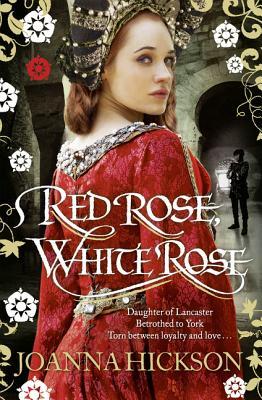
Red Rose, White Rose

20892659

Book Title: Red Rose, White Rose
Author: Joanna Hickson
Date Started: November 8th 2014
Date Completed: November 30th 2014
Genres: Historical, Romance
Rating: Four stars
Review:

Thank you to HarperFiction for providing me with this copy to review.

Because I wasn't really aware of the actual history of The War of the Roses, I didn't really know what was going on outside of the narration - which probably meant I missed out on a quite a lot of the story. Even so, I did enjoy most of this book, despite not being completely aware of consequences not witnessed by the narrators.

Cicely Neville is the youngest daughter of the Ralph Neville, and has been betrothed to Richard, Duke of York. And as power shifts in the years following her marriage, Cicely could become the most powerful woman England. But on top of the conflict between the White Roses of York and the Red Roses of Lancaster, Cicely has a dark secret which will cause her dire consequences in the future.

At first, I found Hickson's writing a little bit jerky and hard to get along with, but after I'd moved further into the story and was comfortable with the characters and their positions, I found that actually I really enjoyed the dual narrative. The only issue I really had with the writing was the vast amount of historical detail - which isn't a bad thing thing at all - but the fact that it was dumped onto the reader as facts throughout the entire book. I would've much preferred to have perhaps a little less detail communicated through the narrative or speech rather than just stated on the page.

The story arcs, in my opinion, are the best thing about this book. Because the story spans over such a huge amount of time (something I'll get to in a second), we see the characters develop an awful lot. This made things more exciting for me, because I didn't know how events would affect the people and therefore who they would react. The downside of this massive time span was that everything just wasn't focused on enough. Far too much was tried to be packed into a 500 page book so I didn't understand how certain things impacted overall. Again, I might have understood this better if I knew the history, but since I didn't, I struggled to appreciate the storyline.
Another thing I really would've liked to read about would be the politics; there's so much history packed into the story, but perhaps due to the situation the characters are in, the politics aren't really looked at - or I just didn't understand them when they were put in with everything else. This again made it really hard to understand the story because I didn't know the history.
However, towards the middle of the novel, I really started to enjoy it: I knew the characters, I was vaguely aware of the story and consequences and I had gotten used to the writing style. When things got complicated towards the end, I got lost again, but I appreciated the last few chapters despite not really knowing why things were happening. Basically, if you know the history, I think you'll really enjoy it. If you don't, you're going to have a bit of trouble with the understanding.

The characters were the element that I think people that didn't know the history could really get invested in, because you can follow their whole journey and understand where they're coming from.
Cicely was a brilliant character I think, especially because of her arc and development throughout the story. She wasn't really a very nice person, and because of this I felt that her actions were a lot more realistic and understandable, and I also assume it's true to the history.
Cuthbert narraters the other half of the book, and I have to say I was more interested in Cicely's half-brother's story. This was due to the fact he's involved in a lot more action rather than the household, and that interests me more. Hilda, who's featured in both but I think is more impactful on Cuthbert's story, was my favourite character because it's clear she knows a lot more than she lets on.

I think the pacing of this book depends on how much the reader knows and understands about The War of the Roses. Being pretty much entirely unaware of the events of the 1400s, I think I found chapters that were explaining key points fairly boring just because I didn't know what was going on. But, if I'd already known a little more about the circumstances I probably could've appreciated the deal more.

Red Rose, White Rose is a great novel about The War of the Roses, but it'd probably be a good idea to brush up on your history before you try diving into the story to avoid confusion. I would say that patience is needed and younger readers probably wouldn't get along and/or find it appropriate at times.

Stay tuned for a very special Q&A with Joanna, coming December 11th!

Image Sources: HarperFiction

Thursday, 29 May 2014

Half a King

20726853

Book Title: Half a King
Author: Joe Abercrombie
Series: Shattered Sea #1
Date Started: May 26th 2014
Date Completed: May 29th 2014
Genres: Fantasy, Adventure, Action
Rating: Four stars
Review:

Thanks to HarperVoyager for the Advanced Reader's Copy for review.

I really enjoyed Half a King; being a lover of fantasy, it wasn't hard for me to become fascinated by the history of this new world, and I quickly slipped into the story and was lost pretty early on. Though this book is potentially awesome, for me it lacked that magical spark that sets each fantasy apart from each other and makes them special - however near the end of the book it started to peek through. I'm looking forward to the rest of the series to see that spark really ignite.

Yarvi is the King's son, but he will never been seen as worthy by those around him. But when his father and brother are murdered, and Yarvi forced to take the throne and avenge his family's deaths, he's thrown into the deep depths of war, betrayal and the nature of men.

It’s clear Abercrombie is a fantasy writer right from the start: the old-fashioned phrases and poetic dialogue immediately sets the tone for the world and characters in the novel, and adds to the tense atmosphere.
Something that particularly stuck out to me was the action. It’s common to have the odd battle or two in an epic fantasy book, but rarely are they written in such detail. Abercrombie portrays the movement itself very well, but also the affect that has on the protagonist. Despite the third-person narrative, it was still clear how Yarvi reacted, which consequently made the battle scenes more intense.

The introduction into this world was really good, and little details were being dropped into the story gradually. My favourite part of the book was the world building, because nothing was obvious at the start, but as you went along, you started to understand the history more and more. I hope that the events making Yavri’s world as it is are elaborated on in later books.
Although I was interested in this book very early on, I was completely sold at the first twist. You know a book is good when you have to put it down for a second and just absorb what happened. This occurred about three or four times throughout the whole book, which is really impressive.
The ending to this book was perfect. I mentioned earlier how I only really felt a spark in the story towards the conclusion. What I found so good about the last section of the book was the way it was fast paced at times, but then slowed down to let the reader really understand how everything was being solved. It wasn’t a short-lived ending: while it neatly tied off the necessary strings, it left quite a few more left to be picked up in later books.

Each character in this story was different and grew through the story. Though some were only featured fleetingly, the bonds they made and impressions they left impacted on the story well and keep it driving on.
I didn’t know what to make of Yarvi at first. It was clear he had accepted a life he was happy with, and so when he was forced into one he had been denied and no longer wanted, I did feel sorry for him. The following events enforced that, so by the time it became clear that Yarvi was a good leader and strived for what was honourable, I was on his side. And then Yarvi started making bad choices, and acting like the King he never wanted to be. And now, once again, I’m not quite sure what to make of him. And that makes it very exciting for the next book.

I fell into Yarvi’s world very quickly from the beginning, and found when I started reading, I couldn’t really stop for quite a while. This did, however, wear off a little throughout the novel. The pacing itself was gradual, and while this built up tension for the climax, wasn’t all that interesting during the actual reading process. But, having said that, sometimes still kept me gripped to keep reading numerous chapters at a time.

Half a King is a great in-depth fantasy for Young Adults, but also for older ages as well. Whether you're a fantasy-fan or are just starting off, this epic adventure is brilliantly written and crafted for the reader, and there's so much further the story is going to go.


Image Source: https://www.goodreads.com/book/show/20726853-half-a-king

Saturday, 1 March 2014

Ghostwritten

18708073

Book Title: Ghostwritten
Author: Isabel Wolff
Date Started: February 17th 2014
Date Completed: March 1s 2014
Genres: Contemporary, Historical, Romance
Rating: Five stars
Review:

Ghostwritten was intriguing throughout and presented a perfect mix of a modern contemporary and a historical memoir. Being much more enjoyable than I expected, I enjoyed every minute of this novel and was genuinely touched at various points in the story.

Jenni is a ghostwriter - she writes down other people's ideas and stories. Mostly self-help guides and the odd celebrity biography. But at a friend's wedding she's offered something different. The chance to record the untold story of a victim of Japan's invasion of Java in the Second World War is almost too hard to resist. The only problem is it involves going back to a place Jenni vowed never to return to again, for fear of unearthing a secret she's kept silent about her whole life.

The writing was really easy to slip into and quite quick to read. This meant that I could really focus on the actual story and all the emotions (and there are a lot of emotions). It also made it realistic when it came to the characters and how they thought. Although I usually like very complex characters that have strange thoughts and a poetic inner-monologue, I was still able to connect with these characters and therefore understand how they dealt with what was going on around them.
I suppose the down-side of this was that there wasn’t really anything particularly unique about the writing style, but with such a memorable and in-depth story, I don’t think that really mattered.

The story had some really good tension with Jenni’s secret, and also some of the choices Klara had to face during her time in the camps. However, I felt like some of this tension was released far too quickly. Jenni’s big secret is referred to so many times throughout the beginning of the book that, when it came out, it all flooded out and then seemed to have very little side-effects. I’m not entirely sure how realistic that is - but it lost a lot of fictional tension and consequences.
I’ve always been interested in history, but I didn’t know very much about Japan’s occupation of Java until I read this book. It actually encouraged me to go and look up some more information, as it really fascinated me. Right at the end of the book, it also talks about the attitudes the survivors from Java were treated with once they got to safety, and it made me question what we actually consider a serious event or horrible experience.
There was a really nice balance between the contemporary and historical genres, as well as the mix of very serious issues, and then some smaller ones. I, personally, was more interested in the events in Java, however Jenni’s own ‘smaller’ problems did fit in nicely with the story.
I really liked the end of the book. It was very touching and drew all the necessary strings together.

All of the major characters in Ghostwritten are very likable. This, again, made it very easy to slip into. The only issue I partly have was that the two main characters were very similar when I thought more about them. I suppose, by showing them in two very different situations, this didn’t affect the story too much, but I would have liked to see a bit more differentiation between the women to make them individual.
Jenni, the first narrator, is introduced quickly and shown as a very nice person. We learn a little bit about her early on in the story, and that secret is kept until around two-thirds through the book. I’ve already mentioned that being released a little too quickly. But she is a lovely character.
I found Klara’s story a lot more interesting, as it seemed a lot more important than Jenni’s. She, also, seems like a very lovely and thoughtful person.

The pace started off quickly, with an interesting prologue. Unfortunately, for me it lost its momentum half-way through, so I started to slack a little on the reading. It did, however, pick up again near the end.
Even so, it is quite a slow book that needs its reader to take its time and think about the story as they go along. It’s a comparison between two worlds that are actually more similar than they at first seem, and I think a reader really needs to be thoughtful when they work out what these aspects are.

I would recommend Ghostwritten to fans of historical fiction. It's extremely interesting from a amateur historian's point of view, and I think fascinating for anyone else. It's also a very lovely and touching contemporary and a nice simple read.

Thank you to HarperFiction for providing me with this Proof Copy to review! 

Image Source: https://www.goodreads.com/book/show/18708073-ghostwritten

Tuesday, 19 November 2013

Here's Looking at You


Book Title: Here's Looking at You
Author: Mhairi McFarlene
Date Started: November 11th 2013
Date Completed: November 19th 2013
Genres: Romance, Comedy
Rating: Three stars
Review:

Here's Looking at You actually really surprised me. I got what I was expecting: a romantic adult chick-flick, however there was an extra bonus of some genuinely funny humour and a reasonably good storyline thrown in. I haven't had much experience with the genre, so I'm not too sure how original it is, but I definitely enjoyed it enough to finish it, and it was a nice change from my usual genre.

Anna had a hard time in school, like most of us do. Bullied for her talents, mocked for her looks and humiliated on a grand scale. But that was years ago. Now she’s got a job she loves and friends who don’t care about her unpleasant past. Even the weirdos who turn up to her blind dates aren’t fazing her. That is, until her friends force her to go to a school reunion and meet the tormentors of her childhood. But when no one recognises her, it’s time to try and start again. But is the secret of her identity really as well hidden as she hopes?

I can tell why McFarlene was so successful with her first novel. If it was anything like this, I can see how it appeals to so many people. She has quite a unique writing style: quirky and cheeky but also quite heartfelt. (I admit, sometimes a little too emotional, but I guess it’s quite hard to write a chick flick and hold in the cheese all of the time.)
It was also genuinely funny. I don’t usually find myself laughing out loud about a book, but actually some of the lines in here were quite witty, and I managed to understand quite a lot of the references, despite being younger than the target audience.
I’m not in love with the book’s style, but only because it isn’t the kind of book I love. It’s strange, but in a nice way. It was weird reading something that didn’t have my heart racing every other page (I’m afraid I don’t get that into lost love), but nonetheless, it was refreshing to read something a little different, with a writing style that is understandable relatable and worth reading.

The story didn’t amaze me as being completely different from anything I could have predicted. Of course, you can guess the ending before you even pick up the book, but it’s always the build-up that’s more exciting and engaging. (‘The thrill is in the chase, never in the capture.’)
I have to say, for the most part, I felt like there were lots of little necessary things that didn’t really need to be included because they distracted from the main plot, and just didn’t interest me. Other people might not be too bothered, but I just thought they weren’t really needed in order to get the story moving.
However, the story was cleverly choreographed to have several different stories going on at the same time as the main romance. For example, I loved Anna’s sister’s engagement and the drama surrounding those chapters, along with James’ divorce with his wife. It was all very real, but found ways to make the serious lighter and more funny.
The biggest issue I had with this book was the unrealistic extent of horrible things said and done to Anna. Especially (spoiler!) when her secret is revealed. I honestly can’t see someone reacting the way James did, and alongside making me extremely angry, I was also quite disappointed that a book that had previously been reasonably good at being believable failed at a climax in the story. This was rather quickly resolved, but I do feel that the character’s behavior at that time in the story is a weak point for the book.
(Spoiler ahead! Although, not really, because it’s kind of predictable.) Yeah, it was a cliche ending, but what was I expecting? At least I actually felt kind of happy for the couple and it was quite sweet.

The characters were all as funny and unique as the book’s style, and I could definitely see some of the author’s personality coming through in their actions and emotions.
Anna was quite fun to follow. Although she ends up only having about half of the chapters in the book, she is clearly the main character, and the person the reader feels closest to whilst reading the book. I think she’s a very relatable character, and has that headstrong ability that makes pretty much any situation either go her way or crumble down around her. She’s cheeky and funny and actually quite a nice person, so I was happy to listen to her story.
James annoyed me through pretty much the entire book. He had a very simplistic thinking pattern compared to the clearly intellectual Anna, and that stuck me as strange for such a book. I felt like a lot of the time he was being selfish, and although I understand his feelings towards his wife, I can’y help thinking that he does make himself suffer more through his actions. To be honest, in the end, I didn’t mind his happy ending, but I was more happy for his new partner than I was for him.
I started off liking Laurence, and then hating him. I think this is what was intended, although the swift change in personalities - from a reasonably laddish, but friendly boy to a snappy player - around half-way through caught me off guard a little.
Anna’s friends always had the funniest parts of the plot covered, and I especially loved Michelle.
Finally though, my favourite characters have to be Anna’s family. You can tell there’s lot of tension between them and more than enough reason for them not to get on, but they have this reinforced kind of bond that makes them stick up each other and accept them. I really liked the way that was portrayed, and I looked forward to the parts where Anna was with her sister and mother, since those were the best parts in my opinion: they had humour, drama, emotion and the most interesting conversations of the whole novel.

I have to admit, the pace did give me some issues. I hate to say it, but I did skim-read a lot of this book, merely because I got bored of certain chapters and wanted to get onto something that caught my attention. It was merely that the book is filled mostly with downplay to build up the character’s relationships and let the reader get to know them more. Unfortunately, I found it hard to stay interested in this, so I quickly read to the dramatic parts.
I don’t actually think this is a flaw so much with the writing, more that I’m used to much faster-paced stories and this just wasn’t getting my heart racing.

Despite my rather neutral star-rating of Here’s Looking at You, I do think it’s a good book and great for a nice light summer read. It’s funny and quirky and very sweet at times. I think you need to really like the genre to be able to stay fully focused throughout reading it, however if you have no qualms about taking your time, McFarlene’s novel is probably perfect for you.
I’d advise an older audience, just because there’s quite a lot of humorous references to things I don’t think many young people are aware of and this, obviously, lowers the enjoyment for the reader if they don’t always understand what the writer’s trying to get across.

Thank you to HarperFiction for supplying me with this advance copy for review.

Image Source: http://2.bp.blogspot.com/-AwxzHj7b9y4/UmAN_imaM7I/
AAAAAAAABvM/ne1ONTz4LSE/s1600/079718-FCT.tif