Wednesday, 10 December 2014

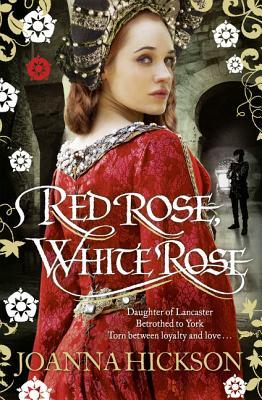
Blog Tour: Red Rose, White Rose, by Joanna Hickson

Hi guys,
I was lucky enough to be offered a copy of Joanna Hickson's
Red Rose White Rose by the wonderful HarperFiction.
And now (even more lucky) I'm part of the blog tour
celebrating the release of the book.
Exciting stuff.


You can follow/chat/keep up to date with Joanna here:
@JoannaHickson on Twitter
Joanna Hickson on Facebook

Here's my Q&A with the lovely Joanna about the novel, and other book-related things:


1. What are you currently reading and what do you think of it?
At the moment I'm reading a really good book called Red Rose White Rose!  Oh I know I wrote it myself but when I receive my first 'proper' book-shaped copy of a novel I have written, all I want to do is delve into it and see how it reads when bound and in print.  Of course I often read on my Kindle and appreciate its advantages but I don't believe the real book will ever be completely supplanted by the virtual version.  By the way, so far I'm rather enjoying it!
However the book I finished just before RRWR arrived was Philippa Gregory's The King's Curse, which is right up my street because it covers the period immediately after my own historical 'home' in the 15th century.  It follows the ups and downs of Margaret Pole, one of the last Yorkist Plantagenets living after the Battle of Bosworth has removed their dynasty from the throne of England and replaced it with the Tudors. She is a granddaughter of Cicely Neville, so it is fascinating for me to see another author's take on one of my heroine's descendants.  Philippa Gregory has Margaret telling her own story and a very long and eventful life she led, filled with dramatic turns of the Wheel of Fortune.  I enjoyed it very much, although history does not give her much light relief!

2.  What was your favourite childhood book?  
When I was very young I lived in Australia and my parents used to read to me from a book called Snugglepot and Cuddlepie by May Gibbs.  The eponymous characters are 'gumnut babies', based on the fruits of the ubiquitous gum trees which cover the Australian countryside and the stories follow their adventures amongst the flora and fauna of the bushland where the author grew up, much as I did myself.  The villains of these adventures are called Banksia Men and I was both fascinated and terrified by them.  The illustrations make them look like the extraordinary 'cones' which appear on native Banksia bushes - ugly and hairy-looking with fat-lipped seed-pods - great objects on which to base creepy characters.  Children love to be a bit frightened when they're being read to while sitting on a safe lap don't they?  For one of my landmark birthdays my artist daughter, who lives in Australia, painted me a 'portrait' of two Banksia Men, which I love.
Just before I came back to live in England at age thirteen I read a time-slip novel called The Gauntlet by Ronald Welch which is set at Carreg Cennan castle in Wales and is about a modern boy who finds a knight's gauntlet lying on the ground, tries it on and is immediately transported back to medieval times and life as a page in the castle.  It was that book that first inspired my love of medieval history and when I visited the same castle later it was a great thrill to wander among its ruined walls and experience first-hand the allure of such an ancient and inspirational building.

3. When did you first become interested in history and writing?
I think I have just answered the history part of this question but as far as writing is concerned that came much earlier.  I can hardly remember a time when I wasn't either reading a novel or writing a story myself, first of all in little hand-made folded-paper books and then, when I got hold of a battered old typewriter, in smudged print on carbon-copies with many crossings-out.  At first they were quite short stories but as time went on I yearned to write a whole novel and I cannot count the number I started and never finished.  Probably every writer recognises that scenario.  However, obviously I eventually managed to complete them and I'd love to say that there are scores tucked away in bottom drawers but I'm not a great hoarder so they've all hit the bin – except those that have been published of course!

4. What were the biggest literary influences on Red Rose, White Rose and your other books?
 I don't think I'm unusual in my literary influences.  At an early age I loved the novels of Charles Dickens and then later came the Brontes, Jane Austen, Henry Fielding and Thomas Hardy.  Of course I also read more contemporary novels, particularly historical fiction.  A strong influence was Anya Seton's novel Katherine (I have a very battered first edition and an equally battered paperback copy, which have both been read many times) and also the Georgian novels of Georgette Heyer.  I always wanted to emulate Heyer's amazing ability to recreate the language of her particular period but I long ago realised that it was a talent unique to her.  Daphne du Maurier was another influence, particularly The House on the Strand – a rather dark time-slip novel which gripped me intensely.  I wrote a time-slip novel once myself (unpublished), but I now prefer to leave that to the experts like Barbara Erskine and wallow uninterrupted in my preferred period of the 15th century.

5.  Were you ever tempted to add a bit more fiction or more hard facts at certain points in the novel?
By definition historical fiction is what it is – a story set in a selected period and based on the historical record.  But records are patchy and unreliable and I leave it to the historians to search and interpret them as they see fit.  I am happy to consult the records myself, read historians' interpretations and then employ my imagination to fill in the (sometimes extensive) gaps.  How much fiction and fact the story requires depends on the necessity of creating a narrative that will grip the reader.  There is no point in writing a novel which uses only the history if the reader becomes bored a few pages in.  So yes, I use fiction extensively, especially when it comes to creating character and dialogue but it always follows the historical timeline and is inspired by what I have gleaned from historical sources.

6. Which historical figure of Cicely's world most interested you and how did you go about adapting them for the book?
This is a difficult question to answer because I can't actually write a character that doesn't interest me!  Obviously Cicely was the one who initially grabbed my attention and made me want to write her story and I think it was because she was the youngest child of her father's extensive family – twenty two children!  Digging into the Neville family tree threw up so many fascinating life-stories that I had real trouble restricting the number of her family members that I could include in the narrative without confusing the reader.  In Red Rose White Rose, as I confess in the Author's Notes at the back, I have invented one very important character by giving Cicely a half-brother called Cuthbert who acts as a second narrator to Cicely herself.  On the Neville family tree there is a son called Cuthbert who died in infancy but I have resurrected him and made him an illegitimate son of Cicely's father, the Earl of Westmorland, who is reared in the household and becomes a champion knight and Cicely's bodyguard.  Through his eyes we are able to go onto the battlefields of the Wars of the Roses which would be impossible if Cicely carried all of the narration.

7. If you could enter the novel's world as any character and go through their story, who would it be and why?        
I think it would be the character mentioned above, Cicely's half-brother Cuthbert.  You'll have to read the book to see why but I will just say that because he has a farmer's daughter for a mother and an Earl for a father he looks at life from a more balanced viewpoint than his noble relatives.  He has to fight for what he achieves and overcome injustice and prejudice along the way and I like the man he becomes as a result! 

8. Have you got any exciting plans for your next book and can you tell us anything about it?
Yes, I have very exciting plans for my next book, which will cover the second half of the fifteenth century, further exploring the Wars of the Roses and involving characters I have already used in my previous three books, as well as introducing other major and minor figures from the period.  I wish I could tell you more but things are at a delicate stage of negotiation...Watch my Facebook Page (Joanna Hickson) and Twitter feed @joannahickson for further revelations!

Be sure to check out www.femalefirst.co.uk on the 12th,
and have a look at the previous blogs if you haven't already!


Image Sources: HarperFiction
Thanks to Jaime Frost.

Saturday, 6 December 2014

The Young Elites

20821111

Book Title: The Young Elites
Author: Marie Lu
Series: The Young Elites #1
Date Started: December 2nd 2014
Date Completed: December 6th 2014
Genres: Fantasy, Romance, Adventure, Action
Rating: Three stars
Review:


The Young Elites was disappointing, mainly because of the expectation for Lu's writing. I think the biggest issues were the generic storyline and the transition into fantasy, and the huge gap between action-packed sci-fi that we're used to.

Adelina is a survivor of the blood fever. But now she is shunned as a malfetto, and feared by those around her. But after the death of her father, Adelina is picked up by a mysterious group of teenagers: all of them Young Elites, the malfettos gifted with dangerous abilities and the power to threaten the kingdom that detests them. But as circumstances start to turn against her, Adelina must choose if her loyalty belongs to these people, or to her family.

The big surprise on starting this novel was the...well that lack of flair in the writing. This shocked me because it's Marie Lu: the queen of vibrant, action-packed, awesome writing. And when things didn't really get better as I kept reading I think I figured out why. Lu's Legend series gravitates around action-packed advanced sci-fi stories and worlds. Because we already have some sort of automatic understanding to a sci-fi world we can go along with it reasonably easily. But fantasy worlds depend a lot more on progressive world-building so we can learn why characters are the way they are before we really get into the action. I think Lu found this different style a bit hard and so we end up having to work it out with patchy information as we go along, which takes away from focus on the characters and story obviously.

There was nothing wrong with the plot line in The Young Elites, but the concept was generic and I felt like I had read the first half of the book a million times before. The world-building was really lacking, and I think that really took away the potential this story had, because there just wasn't enough development and understudying of what it meant to be a malfetto; what the politics behind the crown were etc. There was the typical instalove ridiculously early on and I really didn't feel any threat until the approach of the climax.
Having said that, the end of this book was great. I felt the usual Marie Lu coming back when the action picked up and things didn't depend so much on the world because the climax definitely centered around the characters. I was a bit disappointed that I saw the big twist coming, but I do really appreciate what it meant to the story. I also loved the fact that Adelina DID become dangerous, instead of just being warned she would for the whole story like most books.

Aside from the frankly cheesy names, the characters weren't bad. But I didn't really connect with any of them either and I don't think they were developed enough.
Adelina annoyed me through the whole book really, and I found her actions and thoughts didn't really match up and just generally she was a bit dumb. But I do appreciate the inclusion of a less kick-ass heroine that still is strong and has been through a lot in the past.
Enzo I think could have been a great character, but I think he wasn't developed as anything other than a love interest or a leader.
I loved Raffaele. I just liked him and the wise-figure influence he has on everyone else. I think he was the only character that stood on his own away from a romantic/skill-set he had.

This book was really disappointing at the beginning, and I did get bored throughout most of the book. The big fall down was the fast-paced story, but the very slow progress in the actual story and the characters. When we began to reach the climax, things got so much better so quickly - I assume because it fell back into Lu's speciality of action-packed drama. Otherwise, however, I have to say the pacing just wasn't right.

The Young Elites did disappoint me, but not to the point where I won't consider reading the next book. Quite a few people have felt the same as me I think, so I'm going to see if reviews say the next story is similar or better before I actually pick it up. But I do think the series is going to get better, since following books don't rely so much on learning about the world. I think this book would actually be good for younger readers starting to get into fantasy, but perhaps not for readers that are experienced and lovers of the fantasy genre.

Image Source: https://www.goodreads.com/book/show/20821111-the-young-elites

Sunday, 30 November 2014

Red Rose, White Rose

20892659

Book Title: Red Rose, White Rose
Author: Joanna Hickson
Date Started: November 8th 2014
Date Completed: November 30th 2014
Genres: Historical, Romance
Rating: Four stars
Review:

Thank you to HarperFiction for providing me with this copy to review.

Because I wasn't really aware of the actual history of The War of the Roses, I didn't really know what was going on outside of the narration - which probably meant I missed out on a quite a lot of the story. Even so, I did enjoy most of this book, despite not being completely aware of consequences not witnessed by the narrators.

Cicely Neville is the youngest daughter of the Ralph Neville, and has been betrothed to Richard, Duke of York. And as power shifts in the years following her marriage, Cicely could become the most powerful woman England. But on top of the conflict between the White Roses of York and the Red Roses of Lancaster, Cicely has a dark secret which will cause her dire consequences in the future.

At first, I found Hickson's writing a little bit jerky and hard to get along with, but after I'd moved further into the story and was comfortable with the characters and their positions, I found that actually I really enjoyed the dual narrative. The only issue I really had with the writing was the vast amount of historical detail - which isn't a bad thing thing at all - but the fact that it was dumped onto the reader as facts throughout the entire book. I would've much preferred to have perhaps a little less detail communicated through the narrative or speech rather than just stated on the page.

The story arcs, in my opinion, are the best thing about this book. Because the story spans over such a huge amount of time (something I'll get to in a second), we see the characters develop an awful lot. This made things more exciting for me, because I didn't know how events would affect the people and therefore who they would react. The downside of this massive time span was that everything just wasn't focused on enough. Far too much was tried to be packed into a 500 page book so I didn't understand how certain things impacted overall. Again, I might have understood this better if I knew the history, but since I didn't, I struggled to appreciate the storyline.
Another thing I really would've liked to read about would be the politics; there's so much history packed into the story, but perhaps due to the situation the characters are in, the politics aren't really looked at - or I just didn't understand them when they were put in with everything else. This again made it really hard to understand the story because I didn't know the history.
However, towards the middle of the novel, I really started to enjoy it: I knew the characters, I was vaguely aware of the story and consequences and I had gotten used to the writing style. When things got complicated towards the end, I got lost again, but I appreciated the last few chapters despite not really knowing why things were happening. Basically, if you know the history, I think you'll really enjoy it. If you don't, you're going to have a bit of trouble with the understanding.

The characters were the element that I think people that didn't know the history could really get invested in, because you can follow their whole journey and understand where they're coming from.
Cicely was a brilliant character I think, especially because of her arc and development throughout the story. She wasn't really a very nice person, and because of this I felt that her actions were a lot more realistic and understandable, and I also assume it's true to the history.
Cuthbert narraters the other half of the book, and I have to say I was more interested in Cicely's half-brother's story. This was due to the fact he's involved in a lot more action rather than the household, and that interests me more. Hilda, who's featured in both but I think is more impactful on Cuthbert's story, was my favourite character because it's clear she knows a lot more than she lets on.

I think the pacing of this book depends on how much the reader knows and understands about The War of the Roses. Being pretty much entirely unaware of the events of the 1400s, I think I found chapters that were explaining key points fairly boring just because I didn't know what was going on. But, if I'd already known a little more about the circumstances I probably could've appreciated the deal more.

Red Rose, White Rose is a great novel about The War of the Roses, but it'd probably be a good idea to brush up on your history before you try diving into the story to avoid confusion. I would say that patience is needed and younger readers probably wouldn't get along and/or find it appropriate at times.

Stay tuned for a very special Q&A with Joanna, coming December 11th!

Image Sources: HarperFiction

Tuesday, 18 November 2014

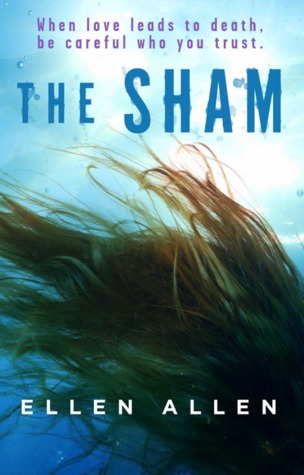
The Sham

22879003

Book Title: The Sham
Author: Ellen Allen
Date Started: October 10th 2014
Date Completed: November 18th 2014
Genres: Contemporary, Mystery
Rating: Three stars
Review:

Thanks to Ellen Allen for approaching me to review this book.

The Sham started off really interestingly, but as more and more parts of the story were added it just became too confusing and strange for me. However, this isn't necessarily a bad thing, and I think some other people might have a different reaction to the book, but personally I found it very hard to follow and I ultimately couldn't end up enjoying it as much as I'd hoped. It's also an important point to mention that this book is not for younger readers as there is some disturbing material included.

Emily has moved to the Sham, where the people are as boring and uneventful as the place is. Until they aren't. When Jack first turns up and girls start to go missing, things seem to be getting a little more exciting. Until fingers are turned towards her new boyfriend, and she discovers Jack has more things to hide than living in the wood.

I was quite impressed by Allen's writing, and right from the first page the flow of the words jumped out at me. Even with complex writing styles, authors sometimes struggle with the way their sentences flow off the tongue, but Allen's narrative really worked nicely for me. The chronological jumps were also interesting, though I think they dwindled slightly more after the middle of the book.
However, though I enjoyed parts of Allen's writing, the style was too informal for me to be comfortable with. The text it littered with culture references and riddled with slang and it just hit one of my pet peeves. But honestly the biggest issue I had with the writing was the fact that a lot of emotions were directly stated to the reader, rather than being implied through the actions and atmosphere: we were told people were angry, but I just didn't feel it in the atmosphere and would have liked to make my own deduction from the way the characters acted and spoke to each other.

I'm pretty sure that the pretty much only - though really big - reason that I didn't get along with The Sham was because there was just too much going on. Too many names to remember; too many issues being addressed; too many little stories conflicting with the main one; too many relationships to keep track of. In such a short book, to have so many things pushed into an actually long duration of time it just meant that nothing was developed or explained enough for me to understand or follow anything. I didn't know what was happening for the majority of the book because I couldn't remember who this person was, or what kind of relationship these people had. And for a murder mystery, it's extremely important that the storyline is clear, because what the characters are investigating is deliberately the opposite. I also wasn't a huge fan of the lack of build up for the character's relationship and the instant trust felt between them without any reason for the whole story.
I do honestly think there's some really good ideas and story lines in this book, but they're lost somewhere in the middle of everything else going on and it's hard to invest yourself in either a whole story patched together through little things, or a tiny section of the book that lasts for a very short amount of time.

This book has a lot of characters, and while I might be able to name around six of them, the majority are just lost to me, and I don't think I could really differentiate any from each other.
Emily's narration was definitely one of the strongest I've ever read and she's undeniably the one character that stands out among the rest. But, unfortunately, I just didn't like her very much and found it very hard to sympathise with her because of this. I'm not even sure what it was about Emily that made me dislike her, but I found it very hard to look at anything in the same way as her.
There isn't much to say about Jack's character because he was very unbelievable to me. His relationship with Emily happened far too quickly and from then on Jack's character seemed to constantly be changing without any real consequence and just added to the confusion of the story for me.

The pacing was just too fast with too much happening. I can't personally tell if it's the fast pace to blame or the fact that there's too much going on, but everything was very hard to follow for me and the book was just too short for things to be developed or explored how I would like.

So, though The Sham really wasn't for me, I don't think everyone's responses would be the same as mine, so I'd encourage readers to have a go if they're interested in more unusual contemporary mystery stories. I do understand that the book is intended to be a little strange, but it just was a bit too much for me. I would recommend devoting attention to this book, since there is so much going on at the same time.

Image Source: https://www.goodreads.com/book/show/
22879003-the-sham?from_search=true

Saturday, 1 November 2014

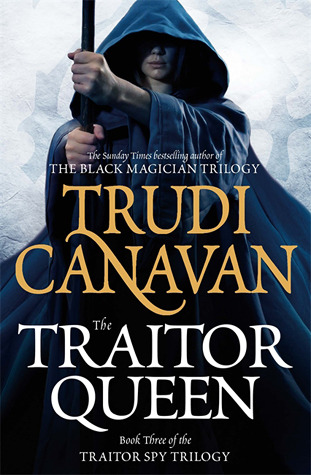
The Traitor Queen

12970162

Book Title: The Traitor Queen
Author: Trudi Canavan
Series: The Traitor Spy Trilogy #3
Date Started: October 26th 2014
Date Completed: November 1st 2014
Genres: Fantasy, Adventure, Mystery
Rating: Four stars
Review:


This novel was a great end to the Traitor Spy Trilogy and I really enjoyed it, but it definitely isn't as good as its prequel series - the Black Magician Trilogy. Though this series is much more focused on the political side of the world, since the characters are all older, I think the threat lacks a little bit and there's a restricted sense of adventure. But it was still great.

Tensions between Sachaka and Kyralia are higher than ever, and with the revolt between the Traitors and Ashaki across the sea, and the battle for power in the city's underworld, Sonea feels another war approaching. She must travel to Sachaka to try and bring peace, or at least a promise of safety for her people, as well as her son who has decided to join the revolution and consequently has strained the ties between the Guild, the Traitors and the king.

Canavan was one of the first high fantasy authors I ever read, and I've adored her writing ever since. She's got an amazing talent at wrapping numerous stories together into one big story, but still letting each have its own personal significance. I also love the personalities and experience put into the narrative even though it's told through 3rd person. To have such a complex world and variety of beliefs and cultures, you've got to be able to support it with a complex narrative - and Canavan does this and more.

From the previous books right up the beginning of this one, you can tell that something serious is building up in Canavan's world. The characters are tense and wary, the ties between the Guild and the foreign countries is weakening, Skellin's reign of power over Kyralia's underworld is becoming stronger. This was brilliant because no time had to be wasted really to build anything up - events could start happening right away.
I have to admit, this didn't happen quite as I expected it to, as it still took quite a while for things to pick up, and consequences were considerably less impactful than I thought. However, there was still a background of tension and implications throughout the whole thing. Especially in the political portion of the book. I absolutely love the politics for Canavan's world. While it's still complex and echoes both the corruption and success of existing or past governments, it's shown from quite a few different angles, as each character's position is explored.
This is another thing that's just amazing about these books: the intertwining stories. It's not as rare as it used to be, but I've read very few books that master the knack of switching between narratives so smoothly and in a way that the reader can click back to the different people and their situations. The way each story usually quite forcefully impacts the others definitely helps to keep track of things.
The ending, as you've probably already gathered, was a bit anticlimactic for me. I still thought it concluded everything very nicely and had enough action to keep me happy, but it just didn't reach the same scale as I've seen Canavan achieve before.

My favourite thing about this sequel trilogy has to be seeing all the old characters again, and where they've progressed from. I really wish some of the older friendships were included more (especially Sonea and Rothen's) but I appreciate that the story does make this hard.
Sonea continues to be my absolute favourite character, and she's such a great heroine. I've loved reading how she's matured since the last trilogy, but also how, due to her background, she does tend to look at everything around her in a very different way, and at times still seems quite young. But, particularly in this novel, we really see her take on her responsibility and protectiveness over Lorkin. (Slight spoiler ahead) I also really loved her growing relationship with Regin. It was so nice to see how they'd grown as people into liking each other after their past, and having a romance that wasn't from a teenage perspective, but also wasn't driven by sex or situation.
Lorkin is another character I have a fondness for. Though I admit I didn't find his chapters too interesting most of the time, he's a great character and watching his methodical mind working all the time wherever he is is a great link to his parents.
I was really happy that Dannyl was included in more than just the politics this time, as well as not just with his lovers. He was forced into a few situations that were out of his comfort zone as the war started, and I think the way he dealt with them, and with both Tayend and Achati was really interesting. And he's just a lovely, lovely person.
Lilia and Anyi's parts of the book were, unfortunately, the most boring to me. I think the biggest problem I had was the rest of the book is very serious with much older characters, so when we jumped back to an equally serious situation, but with younger characters, I just found it slightly hard to adjust fast enough. I did, of course, love Rothen and Cery's inclusions in these parts however, and I think I would've got along with their story earlier on had they both been featured more.

Being a high fantasy novel, Canavan's stories rely a lot on background knowledge and the gradual understanding of the world. So, at times, the pacing can maybe seem a little slow, but as you progress on you realise that actually everything's very important. And, personally, I love the depth of the world in this story so I'd happily just read about it for a whole novel without much need for anything else.

The Traitor Queen didn't disappoint me, but it was slightly underwhelming considering what I've read before from Canavan. However, I still enjoyed it enormously, and it did conclude the trilogy nicely. If you like fantasy, world-building, intertwining stories, fictional politics, magic, a little bit of action and light romance then the Traitor Spy Trilogy is brilliant. But 100% read the other books first, particularly the Black Magician Trilogy (the series this is a sequel to) or I think it'd be quite hard to understand and you'd get less out of it.


Image Source: https://www.goodreads.com/book/show/

12970162-the-traitor-queen