Sunday, 1 November 2015

Six of Crows

23006119

Book Title: Six of Crows
Author: Leigh Bardugo
Series: Six of Crows #1
Date Started: October 21st 2015
Date Completed: October 30th 2015
Genres: Fantasy, Thriller, Romance, Action, Adventure
Quality Rating: Four Stars
Enjoyment Rating: Five Star
Final Rating: Five stars
Review:

Six of Crows had a really solid story and delivery; it wasn't as dark and dangerous as the blurb claims, but it was loads of fun and really it's the characters that make this great. You can pick and choose your favourite to root for (Nina. Definitely Nina), but by the end you'll have fallen in love with them all regardless.

Something a lot of people have been saying about this book is that you don't really need to have read The Grisha Trilogy beforehand - most people are saying this is a better series (and I probably agree, even though I loved Shadow and Bone). But I'm not sure how far I agree that you can go straight into this book: while you don't need to know the story of Bardugo's other trilogy, you definitely need to have background knowledge on the Grisha and how the society of the world works, and I don't think we really get this world building well enough to make that clear in Six of Crows. And even past the point of understanding, Bardugo's universe is amazingly vibrant and detailed, and I think it'd be a shame to miss out on the magic of it because you were trying to work out the lore and politics.
However, the little references to The Grisha Trilogy itself were done well: I'm not a huge fan of intertextuality because it sometimes just feels like pushed advertisement (characters talk about people from other books that they have no reason to know of; a highly convenient link between people or events appear etc). But the little nods to the trilogy were subtle and a lot of the time the culture itself was used instead of direct examples of characters etc. Having said that, there is definitely enough variation from Shadow and Bone and its sequels for it to be worth reading both (the main thing I liked was exploring a poorer and arguably less influential part of the world).

The plot line of Six of Crows primarily focuses on one thing: the heist. The obviously dangerous thing about this is that it could get boring; it could get unnecessarily dragged out; we could focus too much on one character and not enough on everyone else - these were all things I was quietly concerned about, but I was pleasantly surprised when they didn't happen. The structure was thought-through enough so that we got a really good diversity of plot throughout the whole book, and enough variation on the narration characters to make sure we could go back and forth between stories we may have been more interested in.
I was really happy with where the story left off. Six of Crows is its own story with a resolution, but there's room for things to carry on in the sequels. I personally want to know what happens to the characters, and I think Bardugo knew to have faith in her characters so didn't force a cliffhanger or loads of loose ends at the end of the book to make people come back for more next time.

I was impressed that every character had their own personality, since usually there's somewhat of a blur between characters when there's several protagonists. But everyone had their own distinguishable qualities, and everyone had their own time in the narration too.
Kaz was the closest to being the dark, ruthless antihero we're sold and he was brutal at times, admittedly, but there was still a sort of familiarity between everyone else around him - and an unspoken trust. You got the feeling that though they all might be a little wary of him, they trusted him to know what he was doing, and had almost familial ties with him.
I wasn't sure about Inej when she first turned up, but actually she grew on me quite a bit. I think Bardugo had a soft spot for her too, since she seems to be at the center of most big events, but even so her character was interesting. I would've liked it to rely a little less on her backstory, but even so she was a good protagonist to be pushing the plot forward a lot of the time.
Nina was my favourite character, and she definitely felt like the big sister of the group, as well as perhaps the moral compass even when she was conflicted on what was right herself. She was also one of the characters that didn't rely so much on her past to push her present goals: she had history, especially with Matthias, but she was acting in the story because of her beliefs and who she was as a person.
Matthias, Jesper and Wylan were also all interesting characters, but they didn't jump out to me as the most important - nevertheless I still really like their personalities and enjoyed they contribution to the story (I just don't have anything extensive to say about them right now).

Six of Crows takes its sweet time getting started. I have to say I really was getting quite bored for the first hundred odd pages, regardless of how interesting the characters was; there was just a really strong feeling that we were waiting for something to actually happen and start the plot. I would then argue that approaching the climax there was too much exposition 'flashbacks' that could have been put in the early stages to get it moving a little quicker. However, once the story actually started I was really happy with the pacing throughout. It was really nice to have a book focusing really on only one event, but it being naturally long and complex enough to take three hundred pages.

I really enjoyed Six of Crows, and I feel like anyone who enjoyed The Grisha Trilogy but wanted it to step up a little towards the end would love this. Perhaps it isn't the dark heist its marketed as, but it has a diverse range of characters whose objectives all conflict each other and create a genuine uncertainty on whether they will achieve their goal. Great world building, fantasy elements, exciting action, and interesting characters.

Image Sourcehttps://www.goodreads.com/book/show/23006119-six-of-crows

Sunday, 18 October 2015

The Cassquette Girls

27189623

Book Title: The Cassquette Girls
Author: Alys Arden
Date Started: October 16th 2015
Date Completed: October 18th 2015
Genres: Fantasy, Horror, Mystery, Contemporary
Quality Rating: Two Stars
Enjoyment Rating: One Star
Final Rating: Two stars
Review:

◆ Thanks to NetGalley for this eBook copy for review ◆

There are very few books that I give up on, but The Cassquette Girls has become one of them. I put it down at several points and just had to take a step away because it irritated me so much, and then even after deciding to try it again, every single time within three sentences I was seething. Slow pace; irritating writing style; dislikable, paper characters; cheesy horror conventions; I enjoyed it so little that it wasn't worth my continuing.

One of my biggest problems with books set in the modern world is the desire to constantly paint teenagers as materialistic and with difficulty to speak without slang. Yes, there are people out there who are incredibly materialistic, and there are people out there that constantly use slang. But not everyone. You would expect after a traumatic experience for someone to use a word other than 'ugh' to communicate their distress. You would also think that maybe adults would speak differently - even more so if they've been living in a different country to the other person for a while. This wasn't my only issue with Arden's writing style, but even that was enough to distract me from enjoying what I was reading.

I think writing about the storyline of The Cassquette Girls would be a little unfair since I didn't make it that far through, however from what I did read I can honestly say it irritated me. Most horror genre stereotypes (especially film ones) were shoved into just the first 15% of the story - and still barely anything happened! There's such a slow pace filled only with the most predictable conventions imaginable that there was nothing at all engaging or anything that I wanted to read more about.

Quite frankly I didn't get past proper introductions to anyone but Adele and her dad. Having said that, I think there were about six or seven other characters we met that were clearly going to have a part in the rest of the book - most of which Adele already knew apparently. Another thing I noticed from reading the part of this book was the Arden continually provides 'convenient' pieces of information whenever it suits her - its not even a subtle use of deus ex machina and created a huge information dump.
I really disliked Adele, though to be honest she wasn't realistic enough for a character to her hate personally. She didn't seem to react to anything around her: upon returning to her hurricane-ravaged city, she perkily speaks to her dad about sleeping on the top floor of their house (which is apparently stable enough for that despite having been hit by so big a storm "it wasn't even given a name." Even beyond that, she conformed to the snobby but lonely stereotype, yet everyone seemed to be in love with her.

Like I said I didn't get very far through this book, but nothing happened in what I did read apart from a few 'eerie' happenings. I felt like screaming 'get to the point' about eight times: it's all very well and good trying to build up an atmosphere but if everyone's laughing in something that's supposed to resemble a dystopian city for the first hundred pages of the book, you're not going to build up a tense atmosphere.

If you don't get quite so irritated by stereotypical contemporary teenage writing, you might be able to enjoy this a lot more than I did. Looking at the other reviews it seems to be that a lot of people do like this story, so maybe if you want a supernatural fun read then have a look at some of those. But this was absolutely not for me whatsoever, and quite frankly it madam very frustrated.

Image Source - https://www.goodreads.com/book/show/27189623-the-casquette-girls

Friday, 16 October 2015

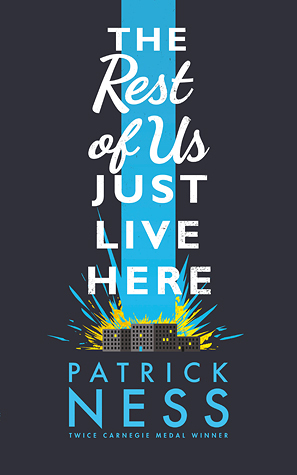
The Rest of Us Just Live Here

22910900

Book Title: The Rest of Us Just Live Here
Author: Patrick Ness
Date Started: October 7th 2015
Date Completed: October 15th 2015
Genres: Contemporary, Fantasy, Adventure, Comedy
Quality Rating: Five Stars
Enjoyment Rating: Five Stars
Final Rating: Five stars
Review:

It's been a while since I've felt so comforted by a book, and I think that's a sentiment for this book that quite a few people could relate to. Alan Bennett's quote fits perfectly for me here: "It is as if a hand has come out and taken yours." While it's mostly known as a book about side characters rather than heroes (something that doesn't exactly explain the story), to me it's more the message that you don't have to be the chosen one to really be worth something, and you don't have to be up against the supernatural to struggle with your situation.

It doesn't matter what landscape Ness' stories take place in because there's always something about them that just enhances whatever you're reading about so that it can become so personal, sometimes even when you can't quite relate to exactly what's happening. I've thought a lot about this and I don't know what specific element it is, but I think the honesty in the stories has to be a part of it. There's such a natural honesty in his writing that it just makes you feel safe, because it's been proven to you that it's not just you that's felt this way. And even if it isn't a particular mutual experience, the fact that there's this person on the other side of a word, or a page, or a character that is so genuine that they want to just put into words a human existence so that it help someone is hard not to appreciate.

The Rest of Us Just Live Here deliberately juxtaposes the typical fantasy adventure common in (let's be honest here) Young Adult fiction. Something I really loved was the fact that it didn't outright criticise the genre; you do get the feeling Ness respects his fellow authors that have work in this genre. Instead he parallels the formula itself between what would be the regular 'entertaining' read, and then to what the reality would actually be. (If you've read any of my other reviews of Young Adult fantasy adventures, you'll probably have noticed that this was going to go in my good books straight away.) As well as the shockwaves within the story itself, the pre-chapter summaries of what was happening to the "indie kids" (your average Clary and Jace; Tris and Four; Percy and Annabeth) were hilarious. I think most of us are well aware of the near identical patterns of these plots by now, but watching them reduced to small paragraphs with exaggeration on the comedic awareness made it seem so insignificant compared to what was happening to our protagonists.
When I try and look back to comment on events in the story I keep coming back to the same thing: there isn't so much a traditional story throughout this book, there's development of the characters over time, and there's a brilliant idea well carried out. And that's enough. Sure, events happen, and I guess you could pick out a climax and a disturbance if you want, but for me the process of reading about these characters captured my attention and quite frankly my heart strings pretty well on their own. The message of the book is essentially to call out that in the 'real world' that we're given in some books (primarily in urban fantasy I would guess) isn't real at all: issues and suffering aren't solved as easily by defeating the bad guy and getting the girl. Sometimes it isn't about getting a happy ending, it's about being happy with where you are and dealing with the bad stuff while you're there.

I became genuinely attached to everyone in this book (except perhaps Nathan, but that's more to do with the position we're placed in by the narrator). I'll keep going on about the fact that Ness actually takes reality and does it justice, but it's just because it makes me so happy to see people who have issues not be portrayed as completely vulnerable and broken. There was a part near the end of the book where I was terrified Ness was going to romanticise the mental illnesses, or trivialise the familial and political issues - but then again I really should have more faith in Patrick Ness. He is Patrick Ness after all.
Mikey was a great protagonist. Mikey was the perfect protagonist, especially to communicate the message of the book. I would also say that he was a really good way to show mental illness in a slightly less scary way: for people that haven't necessarily experienced it themselves, or aren't close to anyone who has I do sometimes think that it can be easy to feel alienated from the issue because you don't have that personal awareness of it, and when people star talking about the darker sides of it it either pushes them away or throws up defences in someone's brain to avoid it altogether. Ness normalises it to the point where you can understand how 'normal' people struggle with these things - but it doesn't make them completely different to everyone else. And it also doesn't make them special or 'the chosen one.'
I could spend pages and pages (metaphorically since electronic reviews don't have pages) talking about each member of the group individually, but quite honestly you'd get bored - and my job is to tell you about the book, not to make you bored. So to summarise the other characters I'd say that they are a brilliantly diverse group all showing a different aspect of a 'normal' life that presents tough issues, but they all prove that it doesn't have to be solved by becoming incredibly talented and special and saving the world (bit of an exaggeration, but essentially what happens in the book). I adored Mel, and related to her a lot. Her sibling relationship with Mikey really helped me invest in them early on. Henna I loved because she didn't have to have this terrible past that allowed her to now be strong. Jared was genuinely lovely and again didn't have to be all torn up over his issues for him to want to help the others.

Admittedly the beginning of this book was a bit slow for me, especially since it was more in the contemporary genre than I had first expected. But at the end of the day it does establish the 'normality' - or rather lack of it - the characters have in their lives next to these crazy but repetitive narratives about the 'special' kids that wreck the town every couple of decades.

The Rest of Us Just Live Here was exactly what I needed when I read it, but even without that perfect timing I think it can still mean so much to a lot of people. The anti-hero/ant-stereotypical adventure idea is definitely included, but to me the contemporary genre show through a lot more than the fantasy, so I wouldn't recommend going into it when you're in the mood for an entertaining adventure. In fact the whole point of the book is to look at those books and say 'yeah, they're fun. But what the end of the day they avoid the harsher realities of life.'

Image Sourcehttps://www.goodreads.com/book/show/22910900-the-rest-of-us-just-live-here

Wednesday, 7 October 2015

The Undays of Aralias Lyons

26043206

Book Title: The Undays of Aralias Lyons
Author: K. L. Horvath
Date Started: October 2nd 2015
Date Completed: October 6th 2015
Genres: Adventure, Fantasy, Romance, Historical
Quality Rating: Two Stars
Enjoyment Rating: Three Stars
Final Rating: Three stars
Review:

◆ Thank you NetGalley for this eBook copy for review ◆

Going into this knowing pretty much nothing other than it involved time travel, The Undays of Aralias Lyons ended up being an entertaining read - but not necessarily one I would pick up if I could go back in time myself.

The biggest thing that stuck out about the writing in this book was the fact it felt like I'd been thrown into the middle of the story. Knowing not a lot about this to start with, I genuinely thought I had missed a book in the series - so I accepted that there were things I wasn't going to understand at first. But then I found out this is Horvath's debut as a published author. And that was a problem. I'm happy to not be spoon fed information, but with so many bizarre variations on the world (talking animals, a huge variety of ages that are never stated, strange rules about time travel) we need a little explanation as to what's happening so it doesn't distract us from the story itself. I found this with the exposition too: while I enjoyed picking up parts of Aralias' past as we went along, I didn't really feel the gravity of danger because we're never really told what Bliss has done to be so evil. Overall, I think Horvath ran ahead of herself in excitement but just needed to slow down and think.

Horvath has definitely created an imaginative story. Although I haven't read a vast selection of books looking at time travel, I think the locations chosen as well as the times worked nicely as a backdrop for the story. I probably would've liked these places to have a little more importance to the story, but they were nice to see things play out in nonetheless.
There isn't that much I can really say about the story other than it was entertaining enough to take up my time, but quite frankly by the end I was a bit bored. I think there's loads of continuity errors in the time-travelling parts but I couldn't keep track of the confusion enough to be sure. And that's fine - for a while. But as it dragged further and on I found it harder and harder to stay engaged, and the fact the book goes on for an unnecessarily long amount of time after the resolution didn't really help.

Aside from the two protagonists I didn't find many of the characters particularly distinguishable. The way you could tell them apart was how bluntly rude or polite Aralias was to them, and I feel like if a little more development had gone into these people there would've been a stronger foundation for the rest of the story to lie on.
While I really enjoyed the father/son relationship Aralias had with Jack (not least because it's something we rarely see these days, especially in fantasy adventures like this) and thought it worked really well to add some depth to his character, he was still incredibly irritating and arrogant. I understand that the questionable attitude was in place partially to get some interesting banter between the characters but he came off as a mean person some of the time, and I'm pretty sure we're supposed to think of him as a real hero. He definitely was not in my eyes.
Clara has me in two minds: on the one hand she played her part in the story well enough. But I can't stop thinking about how paper-thin her personality actually was: she mainly argued with the characters, had a very speedy romance with Aralias and shot a pistol every now and then (though to say this was apparent only with Clara would be a lie). To be perfectly honest, I never thought I'd read a book where the woman doesn't even get to the climax location because she's crying on the floor.

The pacing was dealt with well - whenever I got bored or lost track of what was going on it was definitely due to the explanations of the story as opposed to the pacing not being established. Though you might expect something a little more creative than just following the main protagonists going back and forth from he present for a book where time travel is a main theme, it was probably wiser in hindsight for Horvath to reign in her excitement for the story in this area. Though I still don't feel it excelled in many areas, by making sure big events were nicely spaced throughout the whole book we avoided any complete train wrecks.

If you like the 18th century and a little bit of steampunk time travel with a flamboyant protagonist then perhaps you'll enjoy Horvath's creation more than me. Don't go expecting sophistication (regardless of what the posh mannerisms of the characters might suggest), but I can see people having some fun with it if you don't take it too seriously.

Image Source - https://www.goodreads.com/book/show/26043206-the-undays-of-aralias-lyons

Friday, 2 October 2015

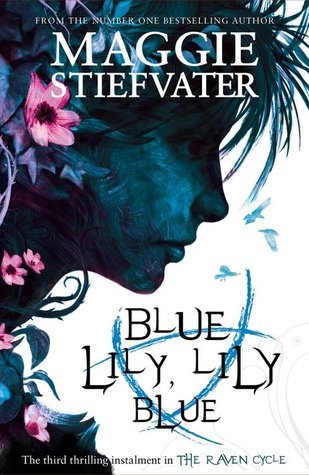
Blue Lily, Lily Blue

22978079

Book Title: Blue Lily, Lily Blue
Author: Maggie Stiefvater
Series: The Raven Cycle #3
Date Started: September 13th 2015
Date Completed: October 1st 2015
Genres: Fantasy, Romance, Contemporary, Adventure
Quality Rating: Three Stars
Enjoyment Rating: Two Stars
Final Rating: Three stars
Review:


Blue Lily, Lily Blue ended up just being a load of smoke and mirrors - it looks pretty on the surface and has a couple of cool moments, but there's no real substance to any of it. Compared to the first book it felt so unnecessary, and I seemed to lose sight of the characters I'd fallen in love with.

Steifvater's writing can be very beautiful sometimes: she has the ability to create such amazingly vivid pictures with actually very little information. The only problem is there need to be pretty locations for her to describe in the first place. Though we still have Cabeswater, the majority of the book is set elsewhere in the almost dreary normal world. What I've liked about this series is its ability to turn the normal into something exciting and new without going over-the-top with its supernatural elements. The Dream Thieves pushed at the boundaries a little bit, but this time it feels like we've stepped back completely out of the danger zone - but now there's nothing really left to be beautiful. Similarly with the characters, Steifvater's been pushing at how far she can go without it being unrealistic but has taken a few too many steps back into safety for the penultimate novel.

Something I loved about the previous books in this series is that they each had their own stories, but it definitely felt like you were progressing towards something much bigger that spanned over everything. I didn't feel that with this novel, and that was probably what disappointed me most. There was no direction to the plot, and by the end I don't even think we've progressed in either story or characters from the last book - a filler-book without even any reason to add stuff in the middle.
There were times when I thought we were heading towards a serious, mature subject while Stiefvater needed time to pass in the story for some reason, and so the slow pace was going to focus on darker things. But as soon as we got near it had to go and be silly: Adam gets in serious financial trouble and the others joke about it and ultimately leave it, another character talks about anxiety but it takes two sentences for it to become some supernatural super power and is never mentioned again. There's just so much wasted potential and it's so frustrating to read it there and watch it just get pushed away. It's not just mature subjects, it feels like interesting characters get ignored, and the beautiful imagery isn't given enough time to shine.
The conclusion was also underwhelming for me; we've had two different kinds of climaxes to these books so far, and I was okay to go with a slower resolution for now, especially since the final book better be exciting enough to make up for it. But since there didn't feel like there was any end goal for the story there wasn't really any resolution to achieve. We're definitely not given any answers to anything and are just led on further into complications (again, it was alright earlier in the series because we weren't even sure there WERE any answers, but now that we do it just feel like we're being manipulated just so one more book can be added to the conventional trilogy).

I really wish we could see more interesting pairings with the characters more often. The chapters with Ronan and Adam, and Persephone and Adam were definitely the most interesting for me here because they weren't completely predictable. I think there's a lot of wasted potential with actually quite a diverse set of characters.
I'm still pretty indifferent to Blue. She still doesn't feel like a protagonist, and for all of her quirkiness ends up quite bland when put next to the boys who have been developed quite a bit more. This is probably more to do with the fact we see the boys with different people in depth a lot more than we do with Blue; she tends to jump around but never really settle, and so it's harder to develop a sort of 'fictional-friendship' when she doesn't so much (or realistically at least).
Gainsay still edges a little closer to the stereotypical arrogant male interest that actually has deep care for his friends for me. It's not the worst trope, and I do like Gansey as a character, but I keeping hoping for it to turn in a slightly different direction. Likewise with Ronan and Noah, I'd like to be a bit surprised by them every now and then. Adam's slightly different in the way that he does have these very developed plot lines, but there's still that tinge of silliness and trivialness that shouldn't be there.

I found the pacing difficult here because it didn't feel like anything was happening. I struggled to keep my attention on the prose, and even the descriptive landscapes that had captivated me previously weren't there to keep my focus. I'm sure that not having complete attention on the story really affected my enjoyment, but at the end of the day, if it doesn't hold my attention that's a big issue.

My disappointment might be a little exaggerated from the reading slump I'm in, but regardless I had issues with The Dream Thieves and those same problems have just grown more into this book. I'm really hoping since The Raven King is the conclusion it'll finally get us to a point in the story where relevant things happen, but until then I can't say I'm happy with how the series has developed since the brilliant start with The Raven Boys.

Image Source - https://www.goodreads.com/book/show/22978079-blue-lily-lily-blue

Saturday, 12 September 2015

Carrying Albert Home

25952515

Book Title: Carrying Albert Home
Author: Homer Hickam
Date Started: September 4th 2015
Date Completed: September 12th 2015
Genres: Historical, Memoir, Adventure, Romance
Quality Rating: Three Stars
Enjoyment Rating: Two Stars
Final Rating: Three stars
Review:

◆ Thank you HarperCollins for providing me with this proof copy to review ◆

Carrying Albert Home started with an intriguing premise: a married couple, with a few problems to say the least, travelling across America during a time of economic failure - with an alligator. It sounded interesting and I was willing to try something new. Unfortunately, this book was okay but ultimately repeated the same sort of quirky stories a dozen or so times and then drew to a close.

The writing was quite suited to the book: pretty straightforward and at times quite quirky with its syntax. In the early parts of the book I really liked this, because it kind of replicated how simple the things Homer wanted were; but as we went on it didn't change at all, and things like action became very hard to follow in such basic terms. I half expected Hickam to become more thoughtful and complex with his prose as we learnt more about the characters but eventually the undemanding style became tedious.

I keep calling this book quirky - and I hope that comes across positively, because I genuinely think some people will enjoy its unusual outlook. But I have to admit, it does feel slightly optimistic to me. It's a very strange atmosphere for around the era of the Great Depression (to be honest I'm not entirely sure of the time period because quite a lot went over my head when I was trying to engage myself); putting the references to Disney and Steinbeck aside, we get quite a humorous and fun portrayal of America's dark days. Having studied various forms of history around the Wall Street Crash and it's consequences this was just bizarre and it made it very hard to concentrate on the actual action - the further detail that Carrying Albert Home is supposed to be somewhat of a memoir exaggerated just how wrong it felt for Homer and Elsie to be having such an adventure during such a crisis.
The structure of the story was very off for me too: having an episodic plot for a road trip is all well and good but when each part follows the same pattern it becomes so dull. Every time, the couple would stop off somewhere, a stranger would say something about the alligator, Elsie would wildly go and get herself into trouble so that Homer could go and get her out of it and they would have a moment where we're supposed to think 'oh maybe now they'll reconcile their marriage' - but of course they wouldn't. This was even more infuriating because of the potential there was: they had an alligator with them, surely it would've caused a few problems for them crossing borders or finding somewhere to stay; there were genuine pieces of action but so widely spread and with so little consequence it was like they never happened; they met up with multiple famous authors (something I really, really didn't like) and yet made nothing of it!
And because of this lack of meaningful or even really relevant happenings throughout the book, the ending feels unbelievable. It's pushed so hard that Elsie and Homer aren't happy together but apparently that can change in a second on the last page to resolve the story. Fair enough if this is based on a true story - and I do think based is the right word - but I don't think the progression of their marriage was portrayed in a way that really made sense of their journey or even helped me emphasise with two people I didn't like particularly at the beginning.

None of the characters felt particularly realistic to me - again for the quirkiness of the story this would have been alright had the book not claimed to be a biographical recount of Homer's (or let's be honest, it's really Elsie's) adventures. And on top of that, when I look back it's actually quite depressing how unkind the people were: Homer spends his time pining for a girl who obviously doesn't have an interest in him and keeps pushing and pushing when it isn't fair, but Elsie ignores every attempt and makes it very clear she still wants a man she hasn't seen in years. 
Homer I really wasn't a fan of: I understand he loves Elsie and wants her to be happy, but at the end of the day she does not want nor need his help and my reaction at numerous points in this book was that he needed to leave her alone.
Elsie would have been quite an interesting character is she hadn't been written so emotionlessly. She won't let herself be pushed around by men in a time when women were at a disadvantage, but at the same time when you look back everything she does it ultimately caused by the actions of the men around her. But she's so... placid? Robotic? Her dialogue especially just feels like paper rather than anything three dimensional and real.

Pacing in road trip stories has always been an issue for me; I just don't like plot lines that don't flow throughout the whole thing. It makes them really hard to get into and sometimes feels lazy and stalls consistency in character development. When that's then combined with a historical era and characters I can't relate to it just drags things out even further.

If you like road trips and 1930/40s America (like I said I wasn't paying too much attention to the time period) you might enjoy this quirky little twist on a story, but for me it just became dull. Nothing overtly wrong with it, but just not enough to really amount to anything. I personally wouldn't market this as a memoir because quite frankly it's very hard to take anything seriously if we're supposed to believe it's all true - the back of my copy even admits everything's true "except the bits that are made up."

Image Sourcehttps://www.goodreads.com/book/show/25952515-carrying-albert-home

Saturday, 5 September 2015

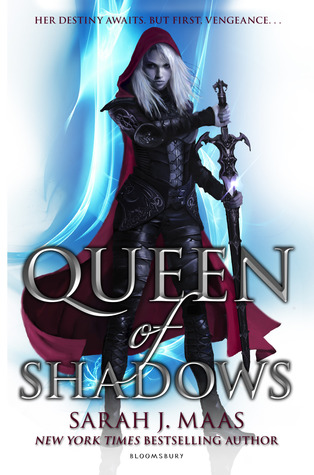
Queen of Shadows

23848145

Book Title: Queen of Shadows
Author: Sarah J. Maas
Series: Throne of Glass #4
Date Started: September 1st 2015
Date Completed: September 4th 2015
Genres: Fantasy, Action, Romance, Adventure
Quality Rating: Five Stars
Enjoyment Rating: Five Stars
Final Rating: Five stars
Review:

Queen of Shadows was a phenomenal addition to the Throne of Glass series: the characters were more courageous, the action was more epic and the plot went in a direction I never would have expected. So why do I feel like it wasn't quite right? It was probably my favourite book in the series so far, but it had more issues than the others as well.

The big thing I kept thinking while reading Queen of Shadows in relation to the whole series was that the story was getting better and better, but the writing started feeling... careless? Some issues were dealt with in frankly overly-convenient or coincidental ways that just didn't feel as thought-out as I'm used to from Maas. I understand how important it was to keep on the path she had planned, but some of the realism was sacrificed in my opinion to do so.
On the other hand, I didn't think the world building could grow any more from the first three books but the way Maas manages to introduces even more landscapes and make them just as stunning and vivid as everything we already know is just astounding. I love exploring Erliea, and even being shown new places within Rifthold itself which have been under our noses the whole time. In fact the development of everything if you look back on the series it amazing and for that I can overlook little inconsistencies, however much they irritated me.

While I was reading I felt like this book was very much about the relationships between everyone and the way their recent developments had changed their intentions and actions towards each other, but looking back it's about a lot than that. There really were genuine problems between people, and admittedly some of it felt very easily resolved and was just the characters being stupid but it just demonstrated how hard it's going to be for Aelin to actually start being queen (and maybe bring into question whether she would be a good queen or not - in fact quite a few of the characters seem to have changed for the worse).
However, there were ultimately two big problems: firstly, you can't keep saying 'actually this happened earlier but I didn't tell you' to get out of tight corners. Deus ex machina only works if you use it sparingly, and was close to frivolous and felt a bit like cheating - the tension supposedly created wasn't even there in the end because I knew there was going to be a catch. [SPOILER WARNING] And second, I felt robbed that the two biggest antagonists are just gone now. I appreciate the shock of it being quick, but for all they've done to Celaena and her friends it was just anticlimactic that they were dealt with so... easily? It was really unsatisfying for me and probably the biggest disappointment of the series so far [END OF SPOILERS].
I really enjoyed the climax of Queen of Shadows. I was so happy when everyone got a piece of the action, despite the fact that it really felt the whole series was drawn to a close. But you never quite know how Sarah's going to carry on the story at the end of each book, but she always manages to do it. And because of that I'm very excited for what's to come.

Queen of Shadows introduced even more new characters than before. Maas is one of those few authors that are able to manage huge numbers and keep them relevant and interesting to the reader - most of the time. I sometimes felt an inclusion of a particular character wasn't needed or perhaps took away from the pace of the plot, and there were some I didn't really care about when I was reading.
Aelin (who will always be Celaena to me, not matter how awesome Aelin also is) had a very interesting arc in this book. Though I do find Celaena more fascinating as a character because of how volatile and unpredictable and conflicted she is, Aelin still takes on the world and won't let anyone push her around. It actually presents more problems than it has in the past because of how everyone expects her to act as a queen - she's still kick ass and wonderful and confident in her own skin.
I really like Rowan and Aedion, and their relationships with Aelin are so entertaining to read. I think especially in Queen of Shadows they became the people Aelin really needed around; everyone else practically abandons her but they trust her and her abilities and will stick up for her anyway. I have to say it did feel like the others characters were a bit neglected when it came to who was featured because of this.
As much as I like the new characters, I miss the original three. I miss Nehemia too, but I miss Celaena, Dorian and Chaol together. They've all changed, and while it's kind of sad I really appreciate how much they've developed. But even so I want to see them together again.
There were some absolutely fantastic female characters this time, and their positions in the story just enhanced the brilliance of the book. I'd been missing female friendships since Crown of Midnight, but then we got Lysandra. I missed having female characters that weren't necessarily powerful but still brave and developed, and then I got Elide. I missed having female character that leant on each other for support but didn't have to be romantic or could be, and we got Manon and Asterin. And then I didn't realise how much I missed female characters standing up for the abilities of other people, and may I present to you the awesome Nesryn.

This book was definitely in two parts, as all the other books have, but it felt like these two didn't really click together as well. I get how they wouldn't really have worked as singular books and I respect Maas for not drawing each story out for the hell of it, but it felt quite strange to have such an climax (or anti-climax depending on how you felt about it) follow on to another climax. Having said that, when I was looking back over the story almost every chapter still had me engaged and excited - it may not have been conventional but I guess it did work in the end.

I had lots of little issues with Queen of Shadows, but in the grand scheme of things it was still fantastic and I can't bring myself to rate it any lower even after some time to reflect back on the book. This is the first time I feel that reading the prequel novellas to the series would enhance the experience, but even without having got through those you can still enjoy the next awesome instalment in the Throne of Glass series.

Image Source https://www.goodreads.com/book/show/23848145-queen-of-shadows