Wednesday, 14 December 2016

White as Snow

362592

Book Title: White as Snow
Author: Tanith Lee
Date Started: November 26th 2016
Date Completed: December 12th 2016
Genres: Fantasy, Romance, Historical
Quality Rating: Three Stars
Enjoyment Rating: Three Star
Final Rating: Three stars
Review:

Hearing that White as Snow was inspired by a blend of fairytale and Greek mythology was enough for me to pick it up and these elements were definitely the highlights for me, but unfortunately the rest didn’t hold up. I don’t want to say the book doesn’t have other merits - it definitely does - but things were so slow it was hard to keep my enthusiasm up.

Finally, I have found a retelling of a fairytale that actually keeps the magic of the original. I have nothing against modern or other unexpected twists in retellings, but reading stories I’m very passionate about get ruined because the writer doesn’t understand the atmosphere and point of fairytales is not something I particularly enjoy. You can tell that Lee understands fairytales, and definitely favours the darker originals in her work. I’ve been looking for something exactly like this for a very long time, it’s just such a shame the pacing wasn’t up to scratch to keep me involved; from the writing-side of it, I loved it. But I couldn’t keep myself engaged with the story and characters.
Likewise, extensive world building is something I really respect and value, especially when it’s elaborating and developing a pre-existing idea, but White as Snow gets very slow very quickly. The main storyline doesn’t even start until halfway through the book because there’s so much time given to setting up characters. Some of this works, the rest is just unnecessary and frankly boring.

If you ever needed a book detailing the cruelty to women in medieval times then this is more than enough. While I’m glad it included some things, at times it was quite sickening to actually read. It’s important that we show sexual abuse, emotional abuse, physical abuse etc, but I struggled to keep coming back to the book when I knew there was going to be more and not a lot of redemption in response.
For arguably such a small novel, there are an awful lot of elements and little storylines introduced throughout that are then left behind not long after. The story spans such a huge time period that it’s understandable that elements are no longer relevant to the characters, but for a reader it became harder to latch onto a story that left behind stories you wanted to explore and placed them with new and unfamiliar ones. I personally really liked the wood folk, for example, and would’ve liked to see them carried on for a little longer, but they fade out at the halfway point and are never really mentioned again. A lot of the reason I found it hard to enjoy this book was due to the almost disjointed nature of the plot line.

With all good retellings, White as Snow has a twist on the original; we don’t only follow Coira (‘snow white’), but also her mother Arpazia (or the ‘wicked queen’). Needless to say, Arpazia has more than enough exposition to explain her well-known evilness and I honestly enjoyed her story more than Coira’s. But - and there’s a big but - sharing the protagonist space between both Arpazia and Coira made it very hard for me to find a place to read from: I feel like we were jumping between the women but not really exploring either of them that well. Pacing got complicated later in the book when both their stories were going on and felt like it dragged even more as a consequence. Additionally, both Arpazia and Coira are distant, detached characters - understandably - but it makes it hard to latch onto their narratives when it doesn’t feel like they’re really in them either.

I loved the sound of White as Snow, and I did like what I read but every time I put it down I found it hard to think of reasons to pick it back up. The story, while vivid and mystical, was slow the point of dragging, and the characters so far removed due to their circumstances that they were hard to engage with. The more I read, the lower the rating went in my head and while I loved this book to begin with, sadly it wasn’t the most enjoyable thing for the all 300 pages.

Image Source - https://www.goodreads.com/book/show/362592.White_as_Snow

Saturday, 26 November 2016

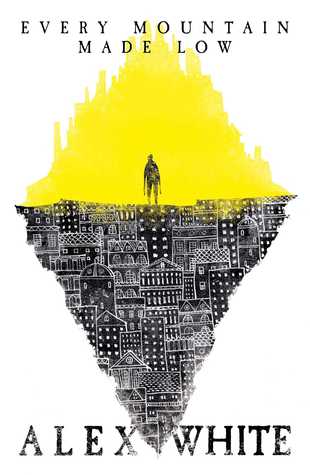
Every Mountain Made Low

29430524

Book Title: Every Mountain Made Low
Author: Alex White
Date Started: November 11th 2016
Date Completed: November 25th 2016
Genres: Fantasy, Dystopian, Thriller
Quality Rating: Three Stars
Enjoyment Rating: Four Star
Final Rating: Four stars
Review:

◆ Thanks to NetGalley for this ebook for review ◆

Every Mountain Made Low was, for the most part, very enjoyable. It's only really just occurring to me how strange that title is; there's no clear link to the story, and the general atmosphere it suggests doesn't suit this book. Nonetheless, White had an engaging premise, a great protagonist and executed his story very well in places - but overall, I can't help feeling that this novel didn't reach its full potential, both in storyline and style. Towards the end, I got the feeling that a word count was trying to be met, rather than the tide of the story naturally taking White along to the end.

White's writing style was generally unremarkable, but concise enough to leave the reader open to engage with the storyline. I often struggle to find something to talk about when there's nothing blatant to praise or criticise in the style of prose, but actually the fact that I was able to fall so easily into the story White was trying to tell is a huge strength of the book in itself.

Every Mountain Made Low has a pretty standard crime-based storyline, but with an added twist of ghosts. When I first read the description of this book on NetGalley, that was certainly something that stuck out to me. In the end, it ended up being less of a key concept and more of a little flavour to the action scenes - when I mentioned that this book didn't reach its full potential, this was definitely one of the things that could've been utilised better. The whole flow of White's ideas could've improved from a little more work, but there was a solid enough world holding things together that it was still enjoyable.
When I began this book my immediate thought was 'five stars, I love it.' From there on certain things happened that I wasn't so happy with, and then a really good part came up again and I was continually switching between five and four stars (and sometimes three, I'll be honest). I was still pretty undecided three-quarters in as to how to rate this book, but then the downward spiral started to come undone. The biggest weakness of this book is that it loses its steam towards the ends: where the beginning had been overall quite slow in worldbuilding, character development and events, the end suddenly had so much condensed into a much smaller space. Normally this wouldn't have torn down a book so much for me, but the momentum of the initial engagement had just run out by that time. Suddenly characters felt very inconsistent past Loxley and there were huge jumps in relationship dynamics in favour of getting to the end of the plot. The conclusion definitely dragged on longer than we needed for how quickly things felt like they were wrapped up. I felt like I'd missed two or three chapters right in the middle of the book where everything should've been properly transitioned into the approach of the climax. Instead, we go from the 'everyday' - however horrible and strange that is for Loxley - into the concluding sequences, when really we needed just a little bit more establishing of where we were headed.

If we're talking about the characters in this book, Loxley is really all the focus you have. Don't get me wrong, there's a whole host of various different people, but no one is really given that much attention in terms of development as our protagonist is. Understandably, I'll admit, because Loxley is a brilliant portrayal of a strong character with a learning disability - something I've come across maybe twice before in my many years of reading. As someone who doesn't know that much about learning disabilities (and so doesn't want to assume Loxley has autism as opposed to another learning disability), the narration did a really good job of showing how Loxley reacts to things is perfectly understandable from her perspective, but points out where other people just don't understand her. Manipulation and general ignorance towards her disability were also shown pretty well, I think, and White intertwined it all quite naturally within the primarily crime-based storyline.

A sort of dystopian meets crime thriller ghost story, Every Mountain Made Low is a very interesting addition to bookshelves. I haven't seen such unflinching diversity for a while, and it was so nice to read about characters who aren't in the mainstream but don't even really ponder on the fact that they aren't. Though things drifted off towards the end for me, I enjoyed reading it for the most part and think the adult crime genre will welcome it happily.

Image Source - https://www.goodreads.com/book/show/29430524-every-mountain-made-low

Thursday, 10 November 2016

Versailles

27993245

Book Title: Versailles
Author: Yannick Hill
Date Started: October 29th 2016
Date Completed: November 9th 2016
Genres: Sci-Fi, Adventure
Quality Rating: Three Stars
Enjoyment Rating: Three Star
Final Rating: Three stars
Review:

◆ Thanks to Unbound Publishers for this copy for review ◆

Versailles was an interesting idea and something I hadn't seen before in the Young Adult genre but it wasn't pulled off as well I would have liked. There were a lot of things I liked about this book, but they were far and few in between and as a whole piece, it couldn't hold my attention. I got about half way through, but unfortunately I just had to make the decision to leave it there because I wasn't giving it much attention anymore because it just left me unengaged.

When I started this book I was pleasantly surprised by how different it felt. The first thing that I noticed was how like a script it read - and in a good way. I can see how some people might find it a bit disjointing, but for a film geek like me, it was strangely refreshing. Not least in the way that it hid some of the very direct storytelling the Hill uses; I hate it when authors tell the reader things in a situation or about a character instead of showing them through the action, but it wasn't so frustrating in this style. Unfortunately, it isn't really enough to hold up a story that doesn't feel like it's progressing even at the halfway point.

The story about the family inside the digital fortress of Versailles was miles ahead of the exploration of technology's influence on our culture. This isn't even that much of an insight into what constant, inescapable media could do to a family in a fictional world, it's about this particular family. Perhaps if the message around technology wasn't so confused it might be different, but what I read in the first half of the novel showed the evilness of humans to be a far greater threat than the technology they used to stay in power. Honestly, as far as I could tell the technology wasn't that damaging at all (it's even a very clear and effective escape for River's problematic situation), but it's in fact the father who's ruining these people's lives - a father who is painted as a one-sided psychopath, I might add.
Which moves me onto my other issue that made it had for me to stay engaged and immersed in the story: I didn't know what I was supposed to take seriously. There's a lot of abstract imagery in Versailles, and that caught my attention at first, but then there's some things that I don't know if they're actually there in this futuristic technological dystopia, or if they're a metaphor. When you combine that with some honestly ridiculous attempts to create teenage memes or whatever you want to call it, you cross a line between what can be understood in the suspension-of-belief that fiction creates, and what's just silly. I don't know what parts of Versailles were supposed to be taken seriously and what was intended to be satirical, and I think that comes from putting some character into prose.

I think the biggest problem for me was that the characters were just dislikeable. Now, I appreciate they're all supposed to be brainwashed at the start (presumably it develops a little more in the second half of the book, but I didn't see huge leaps in the first portion), but it's exaggerated to the point where I didn't like them, and I wasn't rooting for them or anything they did. And the problem was then that you're supposed to connect to these people being smothered in this futuristic digital palace, but I didn't because they felt so alien and emotionless to the point where it wasn't enjoyable to read about them. Even Missy, who arguably leads the story through her rebellious act of running away from both her home and all social media, doesn't feel like she actually believes in what she's doing. They're characters going through the motions of a narrative without the heart to come to life.

For an exploration into the influence of technology for a Young Adult audience, Versailles is an interesting new addition to what's available. Personally, it couldn't decide on what it was enough to be able to get me on board, but there are definitely some aspects which I was pleasantly surprised to read about. It's not quite contemporary but features family dynamics, not quite sci-fi but is definitely very futuristic, not quite adventure but has road-trip aspects to it - the list goes on. I can't say I've seen anything exactly like it on the market so if it sounds intriguing maybe it'll be that something new for you.

Image Source - https://www.goodreads.com/book/show/27993245-versailles

Sunday, 30 October 2016

The Lie Tree

30201080

Book Title: The Lie Tree
Author: Frances Hardinge
Date Started: October 17th 2016
Date Completed: October 29th 2016
Genres: Mystery, Historical, Fantasy
Quality Rating: Four Stars
Enjoyment Rating: Four Star
Final Rating: Four stars
Review:

Hardinge's tale of secrets, scandal and social status on a secluded little island has the ring of 'award-worthiness' all around it, and I was pleasantly surprised to find quite a lot that this wasn't a book that was all bark and no bite. In fact, The Lie Tree had a lot of bite when it came to blending the survival of politics in the early 1800s (particularly for women) and the more fantastical idea of a tree that tells its owner hidden truths. I appreciated the pains that were taken in the first half of the book to achieve a sense of realism that could be understood without overly detailed or dull world building of an unforgiving culture. It was just disappointing for me when Hardinge started making the facts looser and looser to create a sort of climax that was in the end a bit hard to believe.

The element of feminism in this book was completely unexpected but very good. I didn't know a lot about the book going in; I'd heard good things, but I had just thought it would be an interesting story - not an engaging mystery with commentary on the social structure weaved throughout. The representation of women to start with was really nice because we had such a huge range of characters, some very clearly opposing or agreeing with social ideals, and others not quite sure who they were - but again we started to lose the consistency at the midway point. I felt like, in terms of writing and story, Hardinge had put a lot of effort into the initial construction of her world and characters, but then wanted to have fun and so let more and more things slip out of actuality and into entertaining fiction. And don't get me wrong, the entertainment was still there, but it felt out of place compared to the beginning of the book.

I loved the little flashes of all these different genres and subjects we get in this book: archaeology, science, magical realism, thrillers, botany, palaeontology, photography etc. You can tell how much thorough research Hardinge put in, but there's a genuine feel of passion and interest there too. Personally, I've always been fascinated with fossils and ruined artefacts so the book was already scoring points with me, but even areas like botany and science that I know nothing about became quite interesting through the mouths of the characters. Faith as a heroine aided this, as I'll get onto, but just in general Hardinge made what sounded like a dull piece of the landscape of the story into an element that fascinated the protagonist and the reader alike.
Sadly though, as with all mysteries, the revelation of the 'criminal' makes or breaks the story and The Lie Tree was a bit lack-luster for me. I've mentioned several times already that the halfway point of this book peaked in terms of believable realism and took a downward spiral from there. In terms of entertainment and sheer pride, it ticked all the boxes and I loved reading it, but when it came to actually wrapping up what had been a book so concerned with subtly but succinctly getting across its point it just fell down a few pegs.

The Lie Tree has a whole host of characters and Hardinge does very well to balance them all in her narrative with a distinction between each of them, but of course the stand-out character has to be our daring protagonist, Faith. From the start, she's an interesting person, but we see her develop a great deal in a short amount of time - and not in the direction you might expect. I jumped between feeling like I was in Faith's position and feeling voyeuristic a lot in the story, which surprisingly didn't pull me out of the book too much but was a little confusing when it came to how I was supposed to feel about everything that was happening. On the one hand, I really empathised with the horrible ways Faith was being treated, but I also completely understood why people were reacting in the way they were. I'm sure Hardinge probably designed it this way and was a big part of why the book won the Costa book award in 2015. She very cleverly puts you in a place where you aren't quite sure how to react to very strong situations, just like Faith isn't sure how a woman is supposed to do the things she needs to do without breaking her social status.

In all honesty, I bought The Lie Tree because I saw the special Chris Riddell illustrated edition and couldn't say no - I wasn't overly interested beforehand, regardless of the hype. There's only really six or seven full-page drawings but they helped immerse me in the world, and I'm glad that I picked up a book I would otherwise have let pass by because it was worth it. Though I assume the primary audience for the book is maybe 12-16, I think both younger and older readers can enjoy this book, and get a lot from it - if you ever need a history lesson in what life was like for women in the 1800s, here's the perfect way to teach your kids without them knowing you're doing it.

Image Source - https://www.goodreads.com/book/show/30201080-the-lie-tree

Monday, 17 October 2016

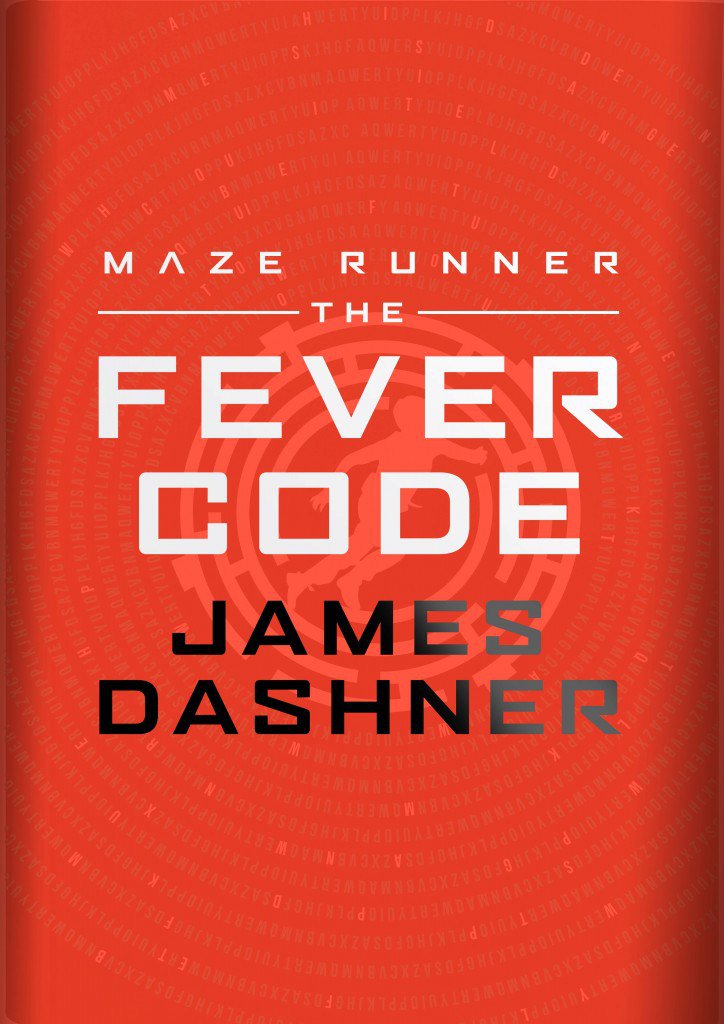
The Fever Code


Book Title: The Fever Code
Author: James Dashner
Series: The Maze Runner #0.6
Date Started: October 7th 2016
Date Completed: October 17th 2016
Genres: Dystopian, Mystery
Quality Rating: Three Stars
Enjoyment Rating: Three Star
Final Rating: Three stars
Review:

I really wanted to enjoy this book, I promise I did. I was ready for some character backstories from the Gladers - especially Newt and his sister, and Minho who we know basically nothing about at all - I was hoping for some proper, sound explanations from WICKED, and maybe a few exciting action scenes in between. I would've taken whatever storyline as long as we had those characters we love back. But I don't feel like we did have them, so in the end I just couldn't enjoy it.

One of the first things I noticed when reading The Fever Code was just how far Dashner has come in his writing style. I always said that his prose really wasn't great in the original trilogy, and it has always been a bit of a struggle for me to get through his juddering style. But, seemingly out of nowhere, this book has a really good flow in its writing. It's not perfect (Dashner really needs to work on distinguishing his character's dialogues past catchphrases and between age groups; when the five year old kids at the start speak the same at the adults do ten years later there's a problem), but overall I was very pleasantly surprised to find that I could actually get lost in the world while I was reading without being pulled out by having to reread a sentence several times to understand it.

This book, in short, is a patchy collection of scenes that Dashner has clearly had in his head since he wrote the first book. These specific scenes are all developed and interesting because he's had a couple of years to turn them over in his head, but when they're combined with lots of scenes that feel like they've been made up on the spot in order to fill in the gaps things start to fall apart and lose their pace a little bit. When some of the scenes that Dashner clearly had a sentimental attachment to (and so wanted to include) are set when the characters are about five just as they're abducted, we then have this enormous gap of about ten years to when most of the actual action of this book happens (predictably, when the first lot of people have been sent into the Glade). What needed to happen was for Dashner's editor (as the unbiased overlooker) to step back and say 'I'm sorry, I see this is important to you, but it's weakening the story' and either not include it or incorporate it in in a flashback or narration or something. Instead we get this huge portion of the book which is trying to compensate for the huge gap between events by being filled with pointless and at times boring scenes that don't transition the time well or even develop characters or plot. We honestly didn't need the first three quarters of this book in terms of making the main story points - and it's not like James had to set the scene and introduce the characters, we're all well aware of who these people are. If we're here, we want new information, but we don't really get it.
So when I had those thoughts going around my head for the majority of this book, and then suddenly that last quarter comes up I really wandered why we needed most of this book that is really a huge introduction to the climax. (All I can think is that there isn't enough in just the ending to write a whole book.) The conclusion to the book itself was a little lack lustre for me, but I do admit that I was already a little too disappointed to be able to take anything in properly anymore. And we all knew how this book was going to end of course, but the 'shock' factor right at the end didn't really surprise or impact me a lot - but even then, the pacing in that last little section was really good! And the emotions started to feel actually real and I caught a glimmer of that original playfulness that makes this trilogy so fun. I wish the whole book had been like that ending quarter, and I wish Dashner had sacrificed those few scenes right at the beginning to focus properly on the later development.

We were promised to be reunited with old characters. Oh, I was so excited, I was so ready to hear these tragic backstories. And we got them a bit - and if you're a fan of Thomas you get it a lot. The Fever Code is very much the Thomas and Teresa show again (understandably, everything does happen because of them), but I missed the side characters and, for most of them, they're barely in more than a couple of pages and mentions. Honestly, this was the biggest thing that got in the way of my enjoyment of this book, and I hold my hands up and say yes, I did let the fact it didn't live up to expectations sway me. But I don't think anyone can go into this book without expectations: it's the prequel to a series that gets you attached to certain characters, of course you want to be able to explore them more in a story that supposedly follows their backstory.
On a personal note, Newt is entirely wasted on this book. I have a personal attachment to him, but he's a well known fan favourite, and it's clear Dashner knew this because he very aptly positioned the token reunion scene between Newt and his sister - but that's pretty much your lot for that relationship. Overall, a lot of the side characters past Teresa, Chuck, and maybe Ava Paige, become little name drops or cameos scattered throughout the story. Some of them aren't necessary to the plot and are just there so you can say 'oh look, here's this person', and the rest don't spend nearly enough time actually exploring those side characters again.

In all fairness, The Fever Code had a tough wrap from the beginning: we all had our hopes for what sort of backstories we were going to explore, and I have to say the films definitely haven't helped in terms of reminding people of what actually happens in the canon. There were some parts that really confused me until I remembered some of the weirder little events in the book (that still don't really make sense). In its own right, this book isn't that bad but it's not what we've been sold, and it didn't focus on the aspects of the prequel I was invested in.

Image Source - https://pbs.twimg.com/media/CmTthUXVIAAc_ny.jpg

Friday, 14 October 2016

The Chess Queen Enigma

25507130

Book Title: The Chess Queen Enigma
Author: Colleen Gleason
Series: Stoker & Holmes #3
Date Started: October 3rd 2016
Date Completed: October 7th 2016
Genres: Mystery, Historical, Thriller, Adventure, Romance
Quality Rating: Two Stars
Enjoyment Rating: Three Star
Final Rating: Three stars
Review:

I started this series a while ago and was very pleasantly surprised at how much entertainment I got out of it. Don't get me wrong, if you're going in wanting a proper storyline and solid logic and characters, you're going to get very easily annoyed - but what these books do give you is the opportunity to just suspend the desire for reason and just enjoy some nonsense. That's been the strength of the series, and my problem with The Chess Queen Enigma was Gleason tried to go further into the realms of a full-functioning mystery when the foundations she'd built were completely flimsy. I don't come to these books for a quality literary story: I come for the fun, and that was what needed to be brought back.

A lot of the time, if I can't bear the writing I can't bear the book. Most novels I don't end up finishing are ones where the style of writing is constantly bringing me out of the story and frustrating me to the point where I don't want to read anymore. And while this series has some truly terrible writing and narrative points - there are times when the action or characters are just so silly and ridiculous that I don't understand how it ever seemed like a good idea to let it through to the final edit - there's a kind of childishness running through the whole series that actually does make it a little easier to accept how bad it is at points. Maybe I'm being a little harsh, but to give credit where it's due, the normal balance between the childish writing, but then the equally innocent and adventurous action almost overrides each other to where you can just enjoy the book. Once again, I would say this wasn't as consistent as in The Chess Queen Enigma as with the other books, but I was still able to let a lot of silly things go because I was enjoying myself.

This book tries to be clever and missed out the fun in doing so. The Stoker and Holmes series isn't a sophisticated or clever series and that's fine; its strength is in that it's so much fun, but it's so important not to lose that. What I noticed happening a bit more in The Chess Queen Enigma was that where we might have previously expected an action scene or a little argument between characters, we were instead given an internal monologue of one of the characters trying to work something complicated out. With a character like Mina Holmes we get that a lot anyway, but it's a lot more engaging when it's said out loud and where we get other people reacting. This book felt a little like Mina and Evaline were going about their own business, going to a place where something briefly happened, then parting ways again. They didn't feel like the team they've been built up to be and so any consequential action was then just a bit dry because of that.
I also wasn't too happy about the conclusion to this sequel. While this series is good at making sure each book has its own plot that weaves into the overarching story, the point of this book felt, well, pointless. In terms of moving the characters forward in their journey as a whole, I can't really see anything that will have a long-lasting effect, and as a stand-alone book it was a bit flat. But on top of that, we have certain aspects of the series that clearly needed to be solved quickly, and so Gleason cheats us a developed solution and just magics the problems away. Obviously, there are plans in place for future books, but part of me feels that since so little happened in this novel - and apparently there was a very big problem to take care of before the next book - why did we not focus on exploring that one issue that didn't appear until the last few pages?

The Chess Queen Enigma loses the characters that we know and love a little bit. They're still there, and still falling into their own pre-made stereotypes, but I noticed that we didn't really get to see them interacting with each other that much. The strength when you have character-driven stories is getting to see them play off each other, and there was definitely a lack of that here; I wanted more of Mina and Grayling arguing, Mina and Evaline grudgingly accepting they're a good team, Pix and Evaline constantly trying to be one step ahead of the other. When the action was lacking, and the writing was trying to become more sophisticated and less pure fun, the thing that could've pulled everything back was the characters but we just weren't given enough opportunities for them to do that.

This book didn't have the thrill factor and entertainment that the previous two had; it was probably the weakest instalment of the series so far. Nevertheless, I still want to read the rest of the series. It's a nice break from what I usually read, and when it's fun it's really fun. I just hope that the series goes back to its original balance of entertainment next to the utterly ridiculous storylines.

Image Source - https://www.goodreads.com/book/show/25507130-the-chess-queen-enigma

Sunday, 2 October 2016

Crooked Kingdom

28933383

Book Title: Crooked Kingdom
Author: Leigh Bardugo
Series: Six of Crows #2
Date Started: September 27th 2016
Date Completed: October 1st 2016
Genres: Fantasy, Mystery, Thriller, Adventure, Romance
Quality Rating: Four Stars
Enjoyment Rating: Five Star
Final Rating: Five stars
Review:

I adored this book and it's a wonderful ending to the story, but I have to admit that it didn't quite live up to Six of Crows. In the end, it didn't stop me loving it in the slightest - I really couldn't put it down - and I'm actually quite sad that it's over now. I'm just hoping Bardugo has more stories in this world hidden up her sleeve to come.

Part of what makes these books so good is how utterly immersive they are, and that comes how well built the world is. Somehow, I remember pretty much everything in terms of politics and magic and action from Six of Crows because it's so well established as a real world. Bardugo has definitely grown as an author since Shadow and Bone, because I seem to remember a lot of people having a problem with how much sheer information you have to take in so quickly in order to just understand what's going on. In Crooked Kingdom I could easily slip back into everything like I read Six of Crows yesterday, and of course the easier it is to get lost in the world, the deeper you can go into the story and its characters.

The big reason why Crooked Kingdom wasn't quite up to Six of Crows' standards was because of this constant feeling that we were in a playground where the characters were testing out all these different relationships and action scenes and crimes, but were ultimately a little safe: pretty much every heist Kaz already has sorted out. He's three steps ahead of everyone without even the reader knowing a lot, and while this exaggerated how awesome he was and gave the reader a little bit of tension when we started repeating that style it definitely reduced the feeling of threat. Six of Crows was so brilliant in its ability to again and again send us to the edge of our seats because the characters were so often being thrown into situations that were essentially entirely out of their control, and we just had to watch them improvise and hope. Crooked Kingdom felt a lot more preplanned.
Choosing Ketterdam as the backdrop for this playground was so good, though. In a way, I was able to let a lot of my frustration with Kaz being seemingly invincible because it is his home turf, and he genuinely does rule the backstreets of the city, regardless of how that affected my anticipation in the book. I loved seeing all the local places the Dregs were surrounded by, but I really wanted time to explore it in more detail.
Crooked Kingdom has a bittersweet ending, and nothing else would have fitted. I was genuinely sad with a lot of the characters, but we've also got such an uplifting conclusion in those last few chapters. Though I didn't connect with the characters quite so much this time - and these books are so heavily character driven - and so didn't react as strongly to their experiences, I was still affected by their endings, and I still don't want to leave them yet.

Bardugo has a knack for worldbuilding, but characters are the real stars of the show in this series and every single one is written with so much care and depth that I just never want to stop reading about them. I have to say that, despite looking at the protagonists' pasts a lot in Crooked Kingdom, I didn't feel like we explored them as people quite as much as in Six of Crows, but I was happy just watching them move on from here - the flashbacks weren't entirely necessary a lot of the time, and weren't as interesting as Kaz, Nina and Matthias' had been in the last book, but I do appreciate the little extra information they gave to the story.
Nina is still my absolute favourite out of the seven protagonists (I'm counting Kuwei even though I know a lot of people don't because I really love his character and I think he does contribute to the atmosphere of the group). Her interactions with Matthias and Kaz especially enforce this: I just love their dynamics and personalities against the world they're in, and they're some of the more unexpected personalities to exist in that sort of backdrop. Kaz' development in this book as well was so interesting, and even though I loved him in Six of Crows, he's probably the one character which Crooked Kingdom added to my love of the person, as opposed to just enforcing it. But honestly, every character is a joy to read, on their own but especially together - I really appreciate Bardugo mixing up the pairings and little groups every now and then just so she can really get the best of their different personalities with any combination of characters.

I love the way Crooked Kingdom draws this story to a close, and Bardugo has really used the structure of the duology the way it should be used. But I really don't want this to be the last time I see these characters; I need more from this world and I don't want to leave it behind.

Image Source - https://www.goodreads.com/book/show/28933383-crooked-kingdom