Tuesday, 2 July 2013

Stardust


Book Title: Stardust
Author: Neil Gaiman
Date Started: June 29th 2013
Date Completed: July 2nd 2013
Genres: Fantasy, Adventure, Romance
Rating: Five stars
Review:

This is a really beautiful book. The story is so vivid, and somehow so innocent; it was just wonderful to read and I could picture everything happening with that magical glow that's only really generated in your mind when there's proper fantasy. It reminds me of the classic fairytales I used to read when I was a kid. It made me a bit nostalgic, to be honest.


Stardust begins in the old country village of Wall. Wall is named as such, after the wall cutting through the field on one side of the town - and the special thing about this wall is that the crack in the very middle of the brickwork, leads to another world if you step through it. We first follow Dunstan Thorn, a young, adventurous boy. When he returns across the wall late at night to revisit a beautiful women he met at the market that occurs once a year between the earthly folk of England, and the people on the other side of the wall, he's left with a surprise nine months later on his doorstep. Years later, his son, Tristan, decides to follow in his father's footsteps and cross the wall in order to find a falling star and win the hand of a very beautiful lady. But the star might not be everything he was expecting...

Neil Gaiman's writing is just wonderful. His fantasy is so vivid and engaging to read. Like other brilliant Faerie authors like Cornelia Funke and Holly Black, he's able to make the reader feel like they're in the places they're reading about.
The even better thing is that he isn't confined to one genre, like so many other authors. Although this is not particularly relevant to this novel, Gaiman is able to switch from fantasy, to paranormal, to mystery, to everyday troubling subjects, to murder mysteries, to science-fiction, to romance and back again. Although this is definitely a fantasy book, with a little bit of romance, I did pick up on the various influences he has in his writing.
I would guess that Stardust is one of Gaiman's older works, but his writing is so consistent, I honestly wouldn't be able to say for definite without looking it up. I'm always thrilled by everything he writes, no matter what genre, which is pretty impressive considering how picky I am about what I read and whether I think it's good or not.

The story was wonderful. The thing I really loved about it, was that it's potentially taking a risk. I think if I hadn't been so engaged by the writing or had loved the characters so much, I might have been put-off by the story. But the fact that everything worked together so well kept me on the edge of my seat throughout the whole thing.
It's the traditional sort of thing you read in fantasy: someone sets off on a quest for whatever reason and has many adventures on the way, before finally finding their way back to the start for a rather satisfying end. It could have been that the little adventures in the middle might have got boring, but actually the way they were told was so brilliant that I was always interested in what would happen next.
Stardust is a very short book, with less than 200 pages, and in a way I wish that more detail could have gone into the protagonist's adventures on their way back to Wall. Not because I think it was neglected, just because I wish there was more to read so that it went on for longer and we might have learnt a little bit more about them and Gaiman's world.
A little warning, it is quite slow to start off, but that's only if you're already aware of the story (which I assume most people are since the film came out a while ago. Something I will comment on later.)

The characters were amazing. I'm always quite confused in old-fashoined fairytales, because the story is usually quite detached from the protagonist so it's under to understand what they're feeling. It's very different from the majority of writing we have these days - but that's why I love Gaiman so much. I like, as a reader, being challenged to work out what's happening to the plot and people in the story, rather than being fed all the information in a really easy way. If the author is just going to tell us what's going on, I don't see much point in reading the book; I might as well see the film or listen to the audiobook. But by reading, I get my own experience from the book. So I want to work for it for it to be worth something.
Tristan was a very good protagonist because we really see him change. At the start, I think it's fair to say, he's a complete idiot. We all know the story of a boy who's falling for a girl and wants to do everything in his power to get her devotion - but Tristan takes this to a new level. (I mean, come on, he's willing to cross a wall into another world to get a star for her and bring it all the way back. Who does that?) Luckily, this changes pretty quickly and we see him progress through understanding his mistakes and righting them in his journey back to wall. We're almost unaware of it until very near the end. I was quite impressed by how slow this progression was, considering how quickly the story moves.
Yvaine was also wonderful. I love her stubbornness and short temper. The best thing is there's always a reason for her outbursts - which I always look forward to since they're very funny and brilliant to read - rather than just being there in order to try and get the reader to like the character.
The Stormhold brothers (I'm not listing them. I'm pretty sure I can only remember about three of them anyway...Primus, Sexus, Septimus...what did I tell you?) were a nice addition to the collection of characters. I think their involvement in the story was useful to let the reader understand what's happening on the political side of things. It was also just quite clever to have them there since we know a little bit more about this new fantasy world because of them.
Victoria Forester was much more different than I imagined her to be. When you hear about Tristan fawning over her and making a fool of himself in the process of getting her attention, we're led to believe that she's a bit of a bitch. But actually, she's a rather ordinary girl that made a bit of a mistake when she was flirting with him. And she very honourably knows that she must right it, despite the fact that it may cause her discomfort. I admire Victoria quite a lot, to be honest, and I think Gaiman did a very good job of including that other side of her.

The pace was mad. Just mad. The adventures of about half a year crammed into 194 pages. Madness. By then again, it is Neil Gaiman.
It was a little slow to start, since the whole first chapter is about Tristan's father - but it's just setting the story up, and is still very interesting to read.
After that, however, events take place so quickly that I had trouble keeping up some of the time. First Tristan was in one place and on the next page, he was halfway across the world somewhere else. So much happened in such little text, yet the reader still learns a great deal about what happens in each place they visit.
I can't think of any other way to describe it than completely mad. Just mad.

Neil Gaiman and Tim Burton need to do a film together. (Just a random thought there.)

I loved all the different points of view that the story was told from. Although the main protagonist is Tristan, and all the other stories also gravitate around him and the star, the other sub-plots were so brilliantly timed and included that I'd think of several of the characters as the main roles. It was also quite useful in keeping up with what was actually going on, since the people have very little, if any, contact with each other.

I don't usually like to link books with the film adaptations, since I stick with the saying 'the book is always better', but actually I do want to mention a few points.
The first of which is: Stardust the movie is in no way, shape or form an adaptation of this book. They're so different if I hadn't known of the connection, I would never have made it. The stories travel such different paths that I don't even think I can compare the two by saying which is best.
I absolutely love the film of Stardust; I think it's funny, engaging, thrilling, interesting; it's a wonderful love story and the world is breathtaking. The characters are original and perfect (especially the captain and Tristan.) It's one of my favourite films.
But the book is also wonderful and beautiful and magical and awe-inspiring. But for completely different reasons.
It's one of those cases (such as The Hunger Games, City of Ember etc etc) that's a very good film - but a completely terrible adaptation of the book.
After both seeing the film and reading the book, I wouldn't associate the two when recommending this title or the movie.

The ending was beautiful and, like the happy half (okay, maybe third...quarter....fifth?) of classic fairytales, ended on a twist that it very rarely anticipated. Again, it was the complete innocence of it that won me over. I just love the way that forgiveness is shown in some books, since I think it would be hard even for the reader to forgive and forget half the things the characters have done in the story.
I won't say it in case whoever's reading this has yet to read this book, but it's one of those endings that may be cheesy and cliche, but is actually a perfect display of mercy in human (well, not exactly human) nature.

I would recommend this book to anyone who loves fantasy, adventure, romance etc. It's beautiful to read and the writing is of such a high quality, it's hard to compare to anyone else.
Any fan of Neil Gaiman's will also love it. His writing and stories just get better and better. This is the first adult novel of Gaiman's I've read, and it's still as enchanting as his younger writing.
If you're reading this because you liked the film, don't be disappointed when it's not what you were expecting. I'm sure you'll still love it, since the genre is still the same, and there definitely are similarities and links between the two - but the stories differ greatly from one another. But I like that: you're getting another story rather than just reliving one you already know in a different body.

Image Source: http://bloximages.chicago2.vip.townnews.com/host.madison.com/
content/tncms/assets/v3/editorial/f/1d/f1d7173a-e7
fb-11e1-8b8c-0019bb2963f4/502d853be2738.preview-620.jpg

The Witch of Duva


Book Title: The Witch of Duva
Author: Leigh Bardugo
Series: The Grisha #0.5
Date Started: June 29th 2013
Date Completed: July 1st 2013
Genres: Fantasy, Adventure
Rating: Four stars
Review:

I have to say I really liked this book - it went back to good old-fashioned fantasy stories about betrayal, tragedy etc. I wasn't entirely sure what was going on the whole time, but admittedly that was because when I read novellas they're more of a time-filler between the times I can't read the full novel I happen to be reading.


The Witch of Duva is about Nadya - a girl without a mother who lives with her father and brother. When Havel, her brother, decides he must leave in order to make a living for himself, Karina descends to take Nadya's dead mother's place in her father's heart. But Karina threatens Nadya to leave with her brother. When Nadya does not such thing, she's forced into a laborious life checking traps in the dead of night. Until she gets lost in the forest's shadows and finds herself at a little cottage in the middle of a clearing where an old woman lives...

I liked the writing. I don't really have much to say about it. It was really good, there were no problems with the flow of the text or anything like that. It was more that the places, feelings and characters didn't come alive to me. Luckily, since the story doesn't depend too much on the reader's reaction, it didn't matter that much.
I just found it a little unremarkable for a fantasy novel. Perhaps more detail in the locations would have helped this - in which case it may have been left out since this is a novella and not a full-blown novel.

I loved the story. Back to classic fairytales. Girl's mother dies and she's left with her father and evil stepmother. She gets lost in the wood whilst doing work to stumble upon a witch who looks after her. Despite the fact that this is your typical fairytale, I didn't get bored. I didn't predict what was going to happen, and I liked the way the audience don't quite know who to trust or what's right to do or wrong.
I have to admit, the end is depressing - like many traditional fairytales and I wonder if Nadya was really aware of what she was doing. I also liked the way we're left actually feeling sorry for the bad characters, but it's too late to do anything about it. I think that's a very clever fact about stories; sometimes the 'bad' character isn't bad, yet still gets the blame.

There aren't that many characters in this story. I think that's quite good considering the plot line; there aren't too many distractions and everything has a purpose.
Nadya wasn't a typical protagonist, because I didn't really felt I knew her. This didn't really affect the story, and I have a feeling it presents a worse picture than it actually is, but I need to say it anyway. I didn't really understood why she did all these things. Since this story is written in the 3rd person, I understand that it might be harder to incorporate a person's feelings - especially since she doesn't talk much. But other authors seem to manage it. (It might be that this was deliberately used in order to make us watch the events from our own point of view - I just don't really think it worked that well.)
I liked the witch. Again, we know basically nothing about her, and we learn very little. But I liked the way she wasn't really the stereotypical witch you find it in fairytales. Indeed, we don't know whether to trust her or not, but she was still a lot gentler than the typical witch. I thought this worked really well when the story comes to its climax; and leaves the reader wondering whether she was actually good after all, or not.
The father confused me. I think there was a reason why he started to neglect Nadya - one the reader is probably supposed to figure out themselves - but I didn't work it out. That might just be me being dim, but I couldn't think of why he would be acting exactly how he was.
I don't really have any comments on Karina.
I wish Nadya and Havel's relationship was shown to us a little more before he left - I think I might have sympathised with the characters a little more that way.

The pace was quite slow throughout the whole thing, even at the climax. Again, this didn't really affect the story that much, but it certainly stopped it from becoming a really good novella.

I just didn't feel as engaged with this book as much as with other books - and I think that's a really important thing. Even though everything's there in theory, it doesn't tie up too well when everything put together.

I would recommend this book to anyone who likes original traditional fairy tales. The writing is a lot more modern than the typical fairytale, so some might find it easier to read.
It really is a good story, I just didn't feel involved in the story - but at the end of the day, that is the style of fairytales, and so makes a lot of sense actually.

Image Source: http://d.gr-assets.com/books/1336644891l/13643163.jpg

Saturday, 29 June 2013

The Runaway Queen


Book Title: The Runaway Queen
Author: Cassandra Clare and Maureen Johnson
Series: The Bane Chronicles #2
Date Started: June 26th 2013
Date Completed: June 29th 2013
Genres: Romance, Fantasy, Action, Adventure
Rating: Four stars
Review:


This was a nice little novella. I can't find anything remarkable to say about it to be honest - it was a perfectly enjoyable read and it wasn't bad at all, but it wasn't particularly amazing either. I think it lived up to my original expectations for the Bane Chronicles, but not my more recent predictions after the first novella.

The Runaway Queen takes place in France and follows Magnus Bane as he's offered a job to help Marie Antoinette and her court leave Paris to escape the revolutionists of the time. But when a group of french vampires steal the queen from under his nose, Magnus has to improvise to get her safely out of the country.

The writing was fine, but it wasn't the typical Cassandra Clare writing. I understand that's she's working with other authors to create these stories, but she managed to keep her unique flare in What Happened in Peru. I feel like it was a bit lost this time.
When I read the first novella in the Bane Chronicles I was surprised at how funny I found it. Whereas The Runaway Queen was a bit bland and lacking Magnus' signature humour.
There was nothing particularly wrong with it, I just didn't find it as engaging as I found the previous novella.

The story was a bit boring. Again, there wasn't really anything wrong with it, but I feel it wasn't as well planned out as Clare usually writes her stories. The beginning part is practically irrelevant except for the mention of a hot air balloon, which could easily have been said in one sentence rather than 20-30% of this story.
Once the story got going, and we got into the action, the thrill took over and I actually got quite interested in what was going on. I read a fair bit of this in one go because the middle part was so good.
Then it fell down again when the vampires got involved. Not because of the vampires - on the contrary I think they were needed to add a bit of danger to the plot since there wasn't much threat up until that point - but because they were in it for about 3% and then disappeared completely. I was expecting a big chase through Paris with Magnus trying desperately to save the queen from a pack of violent vampires. Instead I got him nearly falling asleep as they silently...travel away (spoilers). It didn't really excite me like I was expecting.

Magnus is brilliant, and I will always love him. But he wasn't really the Magnus we all know and love in this book. He was still Magnus, but he didn't really have much humour or fabulousness. This would have been fine, if there was a reason (e.g. he was suffering from one of his many and commonplace heartbreaks), but there wasn't. I think the action parts were so thought through not a whole lot of effort and time went into portraying our beloved Warlock and creating a interesting story.
I liked Axel - he was good love interest. One of the few things to make this a typical Magnus story is the mysterious love interest. And he was very interesting. But we know hardly anything about him. So little goes on in this novella that I would have expected to become more acquainted with the new characters. But I guess not.
It was a...interesting portrayal of Marie Antoinette. I'm just going to leave it at that.
I think a large part of the downfall of this story is that Magnus is alone for most of the book. It's not that Magnus isn't enough to excite the reader on his own, it's just that he's the type of character that functions by bouncing off other people's attitudes and comments. It's just the kind of personality that Clare has created. So when he's on his own for the majority of a story, there isn't anyone for him to be sarcastic to or make fun of jokingly.

I didn't hate it, as this review seems to say. I just was a little disappointed after What Happened in Peru exceeded my expectations so much. I just hope we get the sarcastic, humorous, fabulous, arrogant Magnus Bane back in the next novella.

I would recommend it to anyone who likes Clare's writing. It's not bad, it just isn't as good as other things she's written. Don't read it as an introduction into her works, because I don't want you to be put off from reading her other stories, because she really is a good writer. This just wasn't her best work.

Image Source: http://d.gr-assets.com/books/1368749949l/17334068.jpg

Darkness, Be My Friend


Book Title: Darkness, Be My Friend
Author: John Marsden
Series: The Tomorrow Series #4
Date Started: June 23rd 2013
Date Completed: June 29th 2013
Genres: Action, Thriller, Romance
Rating: Four stars
Review:

I started reading the Tomorrow series a few years ago, after a family friend bought me the first book (original australian edition muhahahhahaha) after discovering my love of books. I fell in love with the characters, story and writing straight away - despite the leap that I'd just made into more sophisticated writing. I have to say, the last book, The Third Day The Frost, left me wondering how a sequel could better it - so I'm not surprised the Darkness Be My Friend didn't quite live up to my expectations for the books.


Darkness Be My Friend starts in New Zealand, where Ellie and her friends are being looked after following the events in Wirrawee that led to their escape of their invaded home. All of them - most of all Ellie herself - are greatly shellshocked from their experiences, but, as time passes, and the progress in Australia stalls, they aren't entirely surprised when they're asked to go back into the country. Living as guerrillas in war time was hard enough when there were eight of them, mostly just trying to survive. Now, with only five left and on a mission to make a difference to the retaking of their home, can they possibly continue to survive when danger is hunting them down whenever they go?

John Marsden writes in a very complex way for Young Adult fiction. Whilst his writing isn't difficult to read, as such, it's definitely more sophisticated and detailed than the majority of teenage fiction out there. A lot of thought and deliberation goes into his passages, so the reader picks up all kinds of emotions from the characters, which definitely adds to the effect.
The Tomorrow series is, firstly, a action/thriller. Yet, for the most part, the plot is actually based around these kids and how they manage to deal with war time and their situation. This book especially, a lot of the writing is about how Ellie and her friends feel and react to their parents being held hostage by the invaders. This is shown very well through Ellie's point of view.
I usually don't like books written from the first person, because I feel like the reader is influenced to think a certain way about people and events - whereas I prefer to draw my own conclusions from adding different sides of an argument that sometimes don't come through when a book is written this way. But Ellie's a very aware girl, and she always understands that there's another side of the story. But, at the same time, she is very selfish - and very real. This combination creates a quite confusing feeling for the reader - but it works in the situations the characters are in because it's a lot easier to empathise with someone when you have an idea about how they feel, not just what they're going through.
It's one of the most intense books I've ever read - there's either action and danger going on, or deep meaningful soliloquies from Ellie.

Like I said, a great deal of the plot is focused on the characters, particularly in this book. Not a whole lot actually happened, event-wise. This is probably why I didn't enjoy it as much as the previous books, just because I really enjoy reading action and adventure.
Having said that, the events that did happen were very well orchestrated. The action scenes were detailed, but brief. Marsden is an incredibly realistic writer; he never goes for the predictable, because the predictable very rarely happens in these situations. Although it may nail-bitingly annoying that the group failed their goal in the book, I have to admire Marsden for actually choosing this route. It's what would likely have happened, and that's why I'm still giving the book a very high rating.
I love the little down-time parts of his novels. I don't usually like quiet-bits in books because I think a lot of authors use them too much because they want a break from writing challenging chapters, but you can tell Marsden always uses them for a reason: sometimes it's to get a certain reaction from the reader; sometimes to prepare or foreshadow a future event; sometimes even just to emphasise how one of the characters is feeling.

The characters are the basis of this book, and it would all crumble down without them and the relationship they have with the reader. After reading the previous three books, I've grown to love these characters so much that I feel for them and I get sad when they do etc etc. And that's exactly what Marsden wants and planned when he started writing the series.
I often feel very sorry for Ellie. The thing that makes her such a great protagonist is that she is nothing special: just an ordinary, normal girl with no amazing abilities or anything. Yet she manages to live through so much. And that's what makes her special. In most books we're greeted by a person who already has something unusual and wonderful about them. What makes Ellie so brilliantly made is that she becomes special throughout the books, so we get to see her change slowly and gradually - and we hardly notice it. In a way she's one of the weaker characters, since it's made quite clear that she's affected by what happens to them quite a lot more than her friends, and she often jeopardises the group through her fear. But because of that the reader can relate to her and her narration makes it clear why she does such things and how she comes to doing them. We're presented with a character who, from the outside, could be considered very selfish and a bad person. But when we get to look inside her, we can tell that actually she's been forced into this situations and dangers and she's just dealing with it the best she can - which may not be very well, but she's only human. It's one of the best representations of human nature I've ever, ever experienced.
Fi becomes a bigger character in this book. Previously, she's still had a vital relationship with Ellie, but now that some of the other characters have left, we're definitely seeing more of her. I've never really been sure of Fi. I'm not quite sure why: she's a perfectly nice person - on the contrary she's an amazingly kind and courageous person.  I think what's always put me off about her is the fact she came from a very rich and posh family right at the beginning of the series. I'm actually quite ashamed of myself for letting a stereotypical role form in my mind, and then stick with me throughout the books, but I can't help it. There may be another reason why I'm not certain of Fi, but if there is I can't think of it.
Homer is my favourite character, which was why I was sad he wasn't such a big part in this book. Homer is the most interesting to me because she's got such a big character and a lot of attitude, and still messes up all the time and is a complete jerk - that I can't help but find Marsden' flawless presentation intriguing. I honestly love him so much. I really wish his and Ellie's friendship was shown more, since we hear about it a lot, but rarely actually experience it. I just think he's such fun to read, even when he's in one of his signature stormy moods.
Kevin used to annoy me, but actually I've grown to like him. I think we're supposed to see him as a jerk in the first book, because he really messes up big time. And that feeling does linger in the other books. But Kevin keeps proving himself in small ways, as Ellie herself points out, and that, in the end, made me like him. Again, it's just another way of dealing with their circumstances. Acting like an idiot must be hard to avoid when everything you know it's there anymore - but sometimes he manages to break through it and be a hero.
Lee confuses me. I like him. I think. Like I said, he confuses me.

The other problem I had with Darkness Be My Friend was that when the climaxes came, they didn't seem particularly important. It's hard, in a book such as this, to have things constantly going on, and yet still push some events out as bigger than others. You can clearly tell what the main parts of the plot are, but when I was reading them, I was more thrilled or excited than I was on the other parts of the story.

The romance is brilliant. It's there a little bit, but it's very dysfunctional - as you would expect in the situation. I really like how that affects Ellie and the way she thinks about everything going on around her. It also doesn't consume the story. I was wary, when reading the first book, about how much it was going to affect the story. Btu actually, it definitely dies down when they realise the seriousness of their situation.
Again, Marsden, the best believable writer in the history of ever.

I would recommend this book to anyone who likes meaningful stories or anything about war time. There's loads of action, and I couldn't say it isn't a thriller. There is romance, but don't expect your typical Young Adult love story. It's anything but. I have a friend who's really into politics and loves these books, so maybe that might also interest you.
It's quite hard reading, do don't be surprised if you're a bit slow at first, it does pick up, especially towards the end. Also, it's quite a subduing, sad book. Don't read it when you're in a sensitive mood - it won't help.
Read the first books first! You won't truly love and understand and feel for the characters until you know their full story. Also, it's quite confusing if you don't know what's previously happened to them.

Image Source: http://bokglantan.files.wordpress.com/2012/08/9781780873145.jpg

Wednesday, 26 June 2013

The Assassin and the Empire


Book Title: The Assassin and the Empire
Author: Sarah J. Maas
Series: Throne of Glass #o.4
Date Started: June 25th 2013
Date Completed: June 26th 2013
Genres: Action, Thriller, Fantasy, Romance, Mystery
Rating: Five stars
Review:

It was so good. So, so good. They've all been wonderful and exciting, but they've all been building up to this massive, epic finale that sets up the perfect cliffhanger for the main novels. I honestly don't know how Maas managed to write a book and then create such a detailed, perfectly planned, set-out backstory that happened before. I'm already completely and utterly sold to the series.


The Assassin and the Empire is the last novella before Maas' first Throne of Glass novel. It takes place immediately after The Assassin and the Underworld. Celeana and Sam, now free of the Assassin's Guild, spend their time lazing around in their new apartment. But after a surprise visit from their old master, both decide they want to leave the city and their past behind them. To raise the appropriate funds for their leave of the Guild, the pair decide to handle their biggest mission yet: taking down the Crime Lord of the city. But are Adarlan's best Assassins taking on too much than they can handle?

The writing style is always brilliant when Maas is writing it. It flows, it's detailed, it's imaginative. The action sequences are flawlessly written and I can accurately see everything as it happens in the story. I also love how Maas can correctly portray her character's emotions.
There's a lot of conflicting feelings in this novella, and I think Maas was able to show both sides of all of them so that the reader is able to emphasise with Celeana as she has to make all the decisions herself.

It's one of my favourites - I don't think I enjoyed it quite as much as The Assassin and the Underworld, because I didn't feel there was as much mystery and suspense character-wise, as well as plot. But it's definitely my favourite. So much happens and it all works so well together and ties in, you can tell the author has spent time and effort perfecting her plan of the story before she started writing.
There's so many twists and turns in this story. I think it's the first of Maas' novellas I've read where I'm constantly having to change my opinion on what I think the characters should do because something's happened or  because they've learnt something new or because Sam or Celeana have a big speech about how they should do things their way.
I didn't want to put it down at all - even in the slower parts. The great thing was, in the fast, action-packed scenes there was plenty of excitement and danger to keep me entertained. But everything apart from the climaxes were still full of tension and important to the storyline, so I was never reading anything irrelevant or inappropriate.

I've said this in every review I've done of Maas' books, but I love the characters so much. As a whole, they work together better than any other cast I've read. Admittedly, there are very few main characters, but in a way that's better because we can tell the author has decided to take more time to really get into a few characters than only shallowly develop a large number of people.
Celeana is my favourite character of all time. Not even just protagonists; kick-ass girls; beautiful people; realistic personalities. She's just my favourite because of so many reasons. When you think of assassins, you might think of people that are still scared, and still have their own emotions etc, but the thing I love about Celeana is it's very clear she's got the killing instinct drilled into her head - and it's obvious she's more than capable of murdering everyone she sees. But even though she's no doubt an assassin, she's still a human being without compromising that. I'm really impressed with that: being able to say your character is one thing - and stick to that - whilst also showing a comparison the reader might not be expecting.
Sam, you kill me, honestly. I love him so much, and he is the best male interest I've read in a Young Adult story. I love the way he and Celeana are actually quite different, yet they work together wonderfully. He's believable, and yet still perfectly imperfect at the same time. I love his scenes, and I really look forward to any of his dialogue or anything that he's in because I think he's a really interesting character that is exactly what Celeana needs.
My mind is constantly changing about Arobynn: sometimes I'm positive he's evil; then I think he's just cruel; or maybe he's misunderstood and I should feel sympathetic to him; then back to the hating him because he's really mean. I'm never sure whether he's a good guy that's really messed up, or whether he's actually been our to get Celeana from the start. And I love that uncertainty because it makes me want to keep coming back for more.

I think the romance in this book is portrayed very well. There's definitely more in it than there was in the last novella (my favourite) and I think that was why I didn't like it quite so much. The romance didn't get in the way of the story, as such, but it was more ingrained in the main plot. This isn't necessarily bad, I just prefer it the other way around.
But I still think it was really well done. Their relationship is very subtle, and I like that because it's realistic. There's still a lot of doubt in Celeana's mind about whether it's the right thing to do - as in most Young Adult romances - but it isn't the insufferable whiny type that just drives me mad.
I think it's very well balanced out.

A really small thing I've been meaning to mention is that I like the way Maas doesn't go into huge detail about Celeana. We're told she's beautiful, and there is the odd description of golden hair or sparkling eyes, but for the most part, we're just told she's beautiful and that's all we need to know. It's a very small thing that isn't vital whatsoever, but I really like the way she's allowing us to just accept Celeana for ourselves.

The ending killed me. I'm not even joking this time. The thing is, is wasn't even the ending. Maas made me suffer for another twenty percent of the book before she let me come to terms with what happened. I hate authors, honestly. They're evil, yet so clever. It was the perfect ending to the novellas, although I am wondering how the hell Celeana's going to carry on now. I guess I'll just have to find out myself.

I would recommend The Assassin and the Empire to everyone. It's so good, and there's loads to appeal to a whole range of genres and preferences. There's mystery, action, romance, fantasy, thrills. It's very emotional and is a fairly easy read that still manages to include a staggering amount of detail to add to the story. I would recommend reading the previous novellas first, because otherwise your heart might not break as much as the story deserves. And I can pretty much guarantee you'll want to read the novel afterwards to find out what happens to Celeana - I do.

Image Source: http://www.bookchickcity.com/wp-content/uploads/
2012/08/the-assassin-and-the-empire.jpg

Tuesday, 25 June 2013

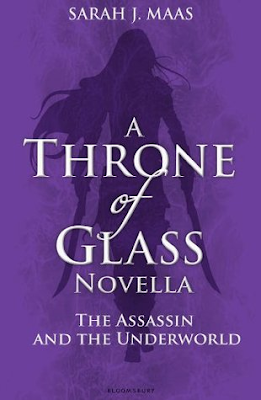
The Assassin and the Underworld


Book Title: The Assassin and the Underworld
Author: Sarah J. Maas
Series: Throne of Glass #o.3
Date Started: June 24th 2013
Date Completed: June 25th 2013
Genres: Action, Thriller, Fantasy, Romance
Rating: Five stars
Review:

This is my favourite of the Throne of Glass novellas so far - and that means something. I love this things so much, they're so good and are literally a whole separate book in each novella. There's so much story and the characters are so real and exciting, I just love them to bits.


The Assassin and the Underworld is set, again, straight after the previous novella, when Celeana is returning back to her master to give him her letter of approval from the Mute Master. But she's surprised to find Arobynn deeply regretting beating her after her rash actions at Skull's Bay (which occurred in the first episode of novellas). Now that she has returned, he showers her in extravagant gifts and offers her a dangerous job, of which she can keep all the reward without splitting it with him. But there's something off with her new mission, and Celeana has enough going on in her world with Sam's strange behaviour and Lysandra's frustrating flirting with him. Can she divide her attentions to stop her messing up or will she doom herself?

Like I've said in my other reviews of Maas' novellas, I absolutely love the writing style. It's quick and fluid; it's flows wonderfully and links with the next passage all the time so that it's completely smooth and easy to read.
There's also a depth to the emotions and descriptions that challenge the readers to actually think and picture what's going on rather than giving them all the information they need.
The action scenes are stunning, as always, and I honestly couldn't put my kindle down - again.

This story is slightly different from the other novellas so far, as it actually shows what a normal mission for Celeana is; up until now we've only experienced her away from home and in strange and uncertain locations with unfamiliar people. I think it's been perfectly planned so that, now we are aware of all the characters in her world and already have our impressions of them, we actually get to see how they function and work within her life. This is a different outlook than most books provide, and I think it works very well in that we can confirm or doubt our impressions of the characters from just of what Celeana's actions and feelings have told us. This is partly why I loved this novella over the other two (of which I still absolutely adore - but this on is just perfect); because we actually get to know what her life is actually like.
I also like it the best because it has a lot more romance than the other two. Now, I'm not huge on romance and I usually like it in small doses. The Assassin and the Underworld is quite focused around the complicated relationship that Celeana has (that isn't really a relationship - or is it? (You shall have to read it to find out. READ IT)). But the romance side doesn't interfere too much with the mystery/action side of the story either, and the main plot stays in tact and interesting at the same time, which I'm always impressed by.
Also, after two novellas of something clearly going on, I was at the point of shouting at the characters to just admit it to each other - and themselves. I really liked the way this worked, actually: by building up our knowledge of them and their emotions and personalities over previous stories, we're already really attached to them by the time the real drama goes on, so we feel for them and we want them to be okay. That's what real writing is: when you genuinely feel an emotion (any emotion: love, hate, lust, fear etc etc) for a fictional person in a fictional situation.

Celeana continues to be my favourite protagonist of all time. She's honestly the most real kick-ass character I've ever read; she's both clever and reckless, and she gets scared remarkably easily, but tries not to let it affect her - rather than the fear being completely non-existent. I love the way she's also portrayed as actually quite girly, yet still able to floor almost anyone in less than ten seconds - it's a stereotype I've never seen addressed before, but actually works incredibly well (why should kick-ass girls have to be tom-boys?) She's just also a really fun person to follow on her journey. Even though the story is told in the 3rd person, Maas still conveys her feelings and thoughts very well and we can almost always tell what Celeana's thinking - or maybe I'm so attached to her I can just predict it without thinking.
Sam continues to be absolutely precious and wonderful. I like the way, even though he's a trained assassin, he's still got that quite geeky, cute boy feel around him - it's not even implied by the writer, I just get that sort of impression off him (although that might be Celeana knowing she's better than him). I've always loved him, even when he was supposedly out to get Celeana, and I think he's an absolutely brilliant addition to the story.
Lysandra pisses me off so much - and for once I don't care, because I know she's supposed to. Usually, even when it's what the author wants, when I don't like a character because of their personality, I really don't like them and I'm very reluctant to read texts they're in. But Lysandra is so necessary to the story that I manage to swallow my pride and enjoy the story and its twists and turns.
This is the first time we actually properly see Arobynn, and I was very curious to see what he was actually like for more than a few pages. I was quite surprised by his tenderness, but I suspected there was a more bitter, sly undercurrent that later showed up. He's a brilliant master for Celeana, because you can clearly see why she looks up to him so much - yet there's also that spark in his personality that explains why she hates him so much at the same time.

The pace is very constant. Like I've said in other reviews, even when there isn't a whole lot happening in the story, the narration is very interesting and often important to the story. I think this is much easier in a smaller novella such as this, so I'll be interested to see how Maas manages in a larger novel.

The progression of Celeana's story is shown very well with the ending twist. You could feel it coming on throughout the story, but even when it happens you're still a little shocked she made that choice in the end. I like those sorts of stories, and I can see where it'll clearly lead onto the next novella (which is the last, so I'll be reading the actual first book in the Throne of Glass series very soon).

I absolutely loved this novel, so I'd recommend it to anyone who loves action, mystery, romance and fantasy-style kingdoms. There's plenty of assassin action in there too, so if you're into magicians and thieves you'll no doubt love these stories. The writing style is excellent, and you don't get bored. If you want to try Maas' writing out, this would be a perfect place to start - although you might want to read the prequel novellas first, though it doesn't make much distance. I just enjoyed reading them as they went on straight after the previous. But definitely try it.

Image Source: http://2.bp.blogspot.com/-y8pv5SEIYTU/UBPX8uKepmI/AAAA
AAAAEa8/qXHkKz0DmbA/s1600/The+Assassin+and+the+underworld.png

Monday, 24 June 2013

The Assassin and the Desert


Book Title: The Assassin and the Desert
Author: Sarah J. Maas
Series: Throne of Glass #o.2
Date Started: June 23rd 2013
Date Completed: June 24th 2013
Genres: Action, Thriller, Fantasy, Romance
Rating: Five stars
Review:

Once again, I'm incredibly impressed with Maas' writing in such a small collection of pages; there's a fully fledged and developed plot in this novella and the characters change and act realistically and there's plot twists and action, and romance, and inner monologues and learning and brilliant descriptions and exciting events and everything. I really, really love Sarah J. Maas' work.


The Assassin and the Desert is set right after the prequel novella The Assassin and the Pirate Lord, where Celeana and Sam manage to free a load of slaves from captivity. After returning back to their master and mentor, Arobynn, both are shocked when he reacts violently at his lose of money and beats Celeana into unconsciousness. When she wakes again, the assassin has been told she must travel to the Mute Master of the Southern deserts and train with him for a month to recieve his letter of approval to be reaccepted into her master's house. But when she reaches the palace, she has trouble getting to grips with the ways of her new lodgings and can't avoid getting into trouble along the way. But there's something a lot more sinister hidden behind the sandy dunes than just a rivalry between the local ruler and the assassins...

Sarah J. Maas' writing is superb: quick, fluid and action-packed. Every word flows into the next perfectly and the rhythm is so consistent you never find yourself confused or bored. Her action sequences are jaw-droppingly effective and imaginable, yet she can still write slower passages. She can convey the emotions of the characters very well, despite the book being narrated in the 3rd person, and I feel really connected to their personalities as well - even though I've literally only read two short novellas, I already know the characters well enough to predict what they're going to do, and understand their choices and opinions. And there's still a lot I don't know about them, so I'm not disinterested.
The story was very original, like all her stories, and I found myself hanging on every word and wanting to know what happened next all the time. I really liked the unpredictable start that threw off the reader from what they knew and transported them into new and dangerous territory before the main plot had even begun. It left us wanting to know more and also showed how Celeana was likely feeling - which made us emphasise with her even more.
The ending was good. Very good. I'm not quite sure how Celeana is such a famous and deadly assassin and yet she still hesitates before killing, but perhaps that's just her character and is explained more in the actual book - I shall have to find out for myself. But I thought it was all very well written and carried out; not predictable and not repetitive.
Every chapter was different, and the story moved quickly, but still gave the reader time to notice how the people and events were developing and spiralling into something a lot more uncontrollable.

I really love Celeana. I think she's an absolutely brilliant protagonist: not only is she kick-ass, sarky and beautiful, but she admits she's wrong and reckless - but still make human mistakes. She's so much more real to me this way; people make mistakes, admit them, and then make them again. It's just how we function. And I love the fact that Celeana's so aware of this, yet still doesn't let it affect her too much. I find her funny and really interesting to follow in her adventures.
I wish Sam was in this one more! (But oh my god, the tiny bit he was in broke my heart.) I love Sam so much - he'd better be in the bloody main novel or I will kill something. I like Ansel, a lot. I thought there was something up with her, but Maas lures you into trusting her, just like Celeana is deceived.
I also kind of wish Ilais had a slightly bigger part, just because I think it could have become quite interesting about how she dealt with him and her feelings for other people.
The Mute Master was nothing like I expected him to be, but that worked so wonderfully well. We're obviously supposed to think of him as something like Arobynn; the threatening, powerful Assassin Lord - but he's actually far nobler and intelligent. I think that worked wonderfully.

There was always something happening and something to keep the audience interested, but even when the pace slowed a little and there wasn't much action or speech, Maas still manages to create a believable world that is enjoyable to read.

I'm once again surprised by how much detail and story can be fitted into under 200 pages. I don't know exactly how long this novella is without looking, but it's definitely not that much. Yet there's still so much plot and story that it's practically bursting at the seams with mystery and menace and everything you could want. I really really enjoy stories that involve thieves and assassins in far off, middle-eastern-esque worlds, but this is by far one of the best I've read. And this isn't even the proper thing yet.

I would recommend this novella to everyone. There's a load of astounding action in there, and mystery, fantasy and a little bit of romance too. It's perfect if you want to try out Maas' writing, and I really love learning a little bit about the characters before I go on to read the actual book - I can tell I'm already going to be attached and in love with the people and places before I open to the first page.
(In particular, if you're a fan of authors like Trudi Canavan or Laini Taylor, this book/novella is definitely for you. I find myself picturing Cery and Sonea from The Black Magician Trilogy many times.)

Image Source: http://www.bookchickcity.com/wp-content/
uploads/2012/07/the-assassin-and-the-desert.jpg